Let's get something straight, right off the bat: Everything the movies have ever taught you about space travel is garbage.
So begins an Edgar nomination for best book this year in the juvenile category. This line establishes setting and tone. However, since this is a mystery novel, we mystery fans need a taste of the mystery, sooner rather than later.
What we get instead for several pages is back story and character development. Important stuff, but please provide a hint of the mystery first, the puzzle etc. That is what hooks mystery fans. At least that is the easiest way to hook. Only after three pages do we get some hint of story plot conflict in the form of some preamble: the 12-year-old narrator says that it's because of the toilets that got him into more trouble than he could ever imagine. No clue though as to what that is. With all preamble, we basically learn that this novel will have a problem, a mystery, but intelligent readers can assume that anyway without being told, since that is kind of what novels are about: problems.
Then three more pages of back story before there is mention of a murder. No details though. The narrator eases in by going through the whole process of him going to the toilet on the moon. Normally this would be ultra boring and unnecessary, but as this is in space it is interesting to learn about how that is done in a low gravity environment. It's through details like this that the author manages to hook, because of the setting and the character rather than the mystery itself. This can only tell you that this is a talented writer. Lesser writers fail every day trying to hook in such a manner.
Anyway, I kept reading all the way to the end. I'm glad I did.
First thing said:
"Help."
Verdict: Pass
Sincerely,
Theodore Moracht
Our critics, all suffering from extremely short attention spans, open random books in the library or bookstore and review the first line, paragraph and page (if it's really good). If we find we can't put it down, we might just review the whole first chapter. When we stumble upon a wonderful beginning, we read to the end to see if good writing really does go all the way.
Showing posts with label 3-star pass. Show all posts
Monday, 27 April 2015
Tuesday, 21 October 2014
The Death of Artemio Cruz by Carlos Fuentes
I wake up…
On a metaphysical level this might be some powerful writing. I can imagine all the stressed-out philosophers, after taking a break from all the hard thinking they do from 9 to 5 and kicking back with a beer to relax and be entertained, being stimulated by this line: I wake up…
Others will simply be mystified by its profoundness. The next line kind of ruins the endless loftiness of the opening line.
The touch of that cold object against my penis wakes me up.
This raises a question or two. Where is this guy? I thought he was in bed. Maybe he is, which would make that cold object all the more troubling. I read on.
I didn't know I could urinate without being aware of it.
So this guy is in some weird situation in bed. We assume he has suffered some catastrophe but need to read on to find out. The writing is terse, blunt and full of tension. I like it. Read some random lines I've brought together:
I can't even make out the nearest voices. If I opened my eyes, would I be able to hear them?… But my eyelids are so heavy: two pieces of lead, coins on my tongue, hammers in my ears, a… a something like tarnished silver in my breath. It all tastes metallic. Or mineral...Then I just lay there, face down on the bed, with my arms hanging, the veins in my wrist tingling...I tighten my face muscles, I open my right eye, and I see it reflected in the squares of glass sewn onto a woman's handbag. That's what I am.
First thing said:
"Look, Doctor, he's just faking..."
So it seems this person is dying or perhaps is just faking it. In any case, there is an uncontrollable desire to read on.
Verdict: Pass
This is part of the series: the top 100 novels from Daniel S. Burt's book called Novel 100, the top 100 novels of all time. There is debate of course as to what should be on that list, but his opinions are as good as any. The Death of Artemio Cruz comes in as the 72nd best novel of all time.
Sincerely,
Theodore Moracht
On a metaphysical level this might be some powerful writing. I can imagine all the stressed-out philosophers, after taking a break from all the hard thinking they do from 9 to 5 and kicking back with a beer to relax and be entertained, being stimulated by this line: I wake up…
Others will simply be mystified by its profoundness. The next line kind of ruins the endless loftiness of the opening line.
The touch of that cold object against my penis wakes me up.
This raises a question or two. Where is this guy? I thought he was in bed. Maybe he is, which would make that cold object all the more troubling. I read on.
I didn't know I could urinate without being aware of it.
So this guy is in some weird situation in bed. We assume he has suffered some catastrophe but need to read on to find out. The writing is terse, blunt and full of tension. I like it. Read some random lines I've brought together:
I can't even make out the nearest voices. If I opened my eyes, would I be able to hear them?… But my eyelids are so heavy: two pieces of lead, coins on my tongue, hammers in my ears, a… a something like tarnished silver in my breath. It all tastes metallic. Or mineral...Then I just lay there, face down on the bed, with my arms hanging, the veins in my wrist tingling...I tighten my face muscles, I open my right eye, and I see it reflected in the squares of glass sewn onto a woman's handbag. That's what I am.
First thing said:
"Look, Doctor, he's just faking..."
"Mr. Cruz…"
"Even now in the hour of his death he has to trick us!"
So it seems this person is dying or perhaps is just faking it. In any case, there is an uncontrollable desire to read on.
Verdict: Pass
This is part of the series: the top 100 novels from Daniel S. Burt's book called Novel 100, the top 100 novels of all time. There is debate of course as to what should be on that list, but his opinions are as good as any. The Death of Artemio Cruz comes in as the 72nd best novel of all time.
Sincerely,
Theodore Moracht
Friday, 17 October 2014
The Iron Dream by Norman Spinrad
About the Author
Adolf Hitler was born in Austria on April 20, 1889.
I think there is a hook here, as the premise of the novel is introduced early. As this falls under the alternate history genre, it caters to a very particular reader. But Hitler roaming around the US is bound to amuse most people. The next paragraph does so much to pull a reader in.
As a young man he migrated to Germany and served in the German army during the Great War. After the war, he dabbled briefly in radical politics in Munich before finally emigrating to New York in 1919. While learning English, he eked out a precarious existence as a sidewalk artist and occasional translator in New York's bohemian haven, Greenwich Village. After several years of this freewheeling life, he began to pick up odd jobs as a magazine and comic illustrator. He did his first interior illustration for the science-fiction magazine Amazing in 1930. By 1932, he was a regular illustrator for the science-fiction magazines, and, by 1935, he had enough confidence in his English to make his debut as a science-fiction writer. He devoted the rest of his life to the science-fiction genre as a writer, illustrator, and fanzine editor. Although best known to present-day SF fans for his novels and stories. Hitler was a popular illustrator during the Golden Age of the thirties, edited several anthologies, wrote lively reviews, and published a popular fanzine. Storm, for nearly ten years.
He won a posthumous Hugo at the 1955 World Science-Fiction Convention for Lord of the Swastika, which was completed just before his death in 1953. For many years, he had been a popular figure at SF conventions, widely known in science-fiction fandom as a wit and nonstop raconteur. Ever since the book's publication, the colorful costumes he created in Lord of the Swastika have been favorite themes at convention masquerades. Hitler died in 1953, but the stories and novels he left behind remain as a legacy to all science-fiction enthusiasts.
This should be treated as a preface or prologue as it is obviously part of the fiction of the novel. It reveals the promise and hook of sorts right off the bat. It's slightly creative to think of Hitler as a writer and biker who immigrated to America.
With a great groaning of tired metal and a hiss of escaping steam, the roadsteamer from Gormond came to a halt in the grimy yard of the Pormi depot, a mere three hours late; quite a respectable performance by Borgravian standards.
This line means that the plot is arriving in a vehicle.
Assorted, roughly humanoid, creatures shambled from the steamer displaying the usual Borgravian variety of skin hues, body parts, and gaits. Bits of food from the more or less continuous picnic that these mutants had held throughout the twelve-hour trip clung to their rude and, for the most part, threadbare clothing. A sour stale odor clung to this gaggle of motley specimens as they scuttled across the muddy courtyard toward the unadorned concrete shed that served as a terminal.
Usually descriptive writing slows the pace, and if it's early in the novel, can unhook a reader fairly quickly, but I like the writing here and the description is filled with conflict.
First thing said:
"Day pass, citizen, or citizen candidate?"
Verdict: Pass
Sincerely,
Rudy Globird
Adolf Hitler was born in Austria on April 20, 1889.
I think there is a hook here, as the premise of the novel is introduced early. As this falls under the alternate history genre, it caters to a very particular reader. But Hitler roaming around the US is bound to amuse most people. The next paragraph does so much to pull a reader in.
As a young man he migrated to Germany and served in the German army during the Great War. After the war, he dabbled briefly in radical politics in Munich before finally emigrating to New York in 1919. While learning English, he eked out a precarious existence as a sidewalk artist and occasional translator in New York's bohemian haven, Greenwich Village. After several years of this freewheeling life, he began to pick up odd jobs as a magazine and comic illustrator. He did his first interior illustration for the science-fiction magazine Amazing in 1930. By 1932, he was a regular illustrator for the science-fiction magazines, and, by 1935, he had enough confidence in his English to make his debut as a science-fiction writer. He devoted the rest of his life to the science-fiction genre as a writer, illustrator, and fanzine editor. Although best known to present-day SF fans for his novels and stories. Hitler was a popular illustrator during the Golden Age of the thirties, edited several anthologies, wrote lively reviews, and published a popular fanzine. Storm, for nearly ten years.
He won a posthumous Hugo at the 1955 World Science-Fiction Convention for Lord of the Swastika, which was completed just before his death in 1953. For many years, he had been a popular figure at SF conventions, widely known in science-fiction fandom as a wit and nonstop raconteur. Ever since the book's publication, the colorful costumes he created in Lord of the Swastika have been favorite themes at convention masquerades. Hitler died in 1953, but the stories and novels he left behind remain as a legacy to all science-fiction enthusiasts.
This should be treated as a preface or prologue as it is obviously part of the fiction of the novel. It reveals the promise and hook of sorts right off the bat. It's slightly creative to think of Hitler as a writer and biker who immigrated to America.
With a great groaning of tired metal and a hiss of escaping steam, the roadsteamer from Gormond came to a halt in the grimy yard of the Pormi depot, a mere three hours late; quite a respectable performance by Borgravian standards.
This line means that the plot is arriving in a vehicle.
Assorted, roughly humanoid, creatures shambled from the steamer displaying the usual Borgravian variety of skin hues, body parts, and gaits. Bits of food from the more or less continuous picnic that these mutants had held throughout the twelve-hour trip clung to their rude and, for the most part, threadbare clothing. A sour stale odor clung to this gaggle of motley specimens as they scuttled across the muddy courtyard toward the unadorned concrete shed that served as a terminal.
Usually descriptive writing slows the pace, and if it's early in the novel, can unhook a reader fairly quickly, but I like the writing here and the description is filled with conflict.
First thing said:
"Day pass, citizen, or citizen candidate?"
Verdict: Pass
Sincerely,
Rudy Globird
Tuesday, 14 October 2014
Horns by Joe Hill
Ignatius Martin Perrish spent the night drunk and doing terrible things.
There is an element of preamble in this line: drunk guy does bad things. Read on to find out if you care; if you dare.
The next line:
He woke the next morning with a headache, put his hands to his temples, and felt something unfamiliar, a pair of knobby pointed protuberances.
.
Damn those protuberances. In chapter 1, which is so short, not even a page, we learn that this guy wakes up with horns, hence the title. Now the question is, what the heck did this guy do last night in a drunken stupor that warrants being branded with horns? But it is nice that the hook and premise are revealed right out of the gate. The stakes have been set and now the reader reads on to see how Ignatius deals with his protuberances.
It sounds obvious for a horror story, and in a way a little cheesy sounding: a guy with horns. Let the jokes begin.
First thing said:
"I'm sick."
Verdict: Pass
Sincerely,
Theodore Moracht
There is an element of preamble in this line: drunk guy does bad things. Read on to find out if you care; if you dare.
The next line:
He woke the next morning with a headache, put his hands to his temples, and felt something unfamiliar, a pair of knobby pointed protuberances.
.
Damn those protuberances. In chapter 1, which is so short, not even a page, we learn that this guy wakes up with horns, hence the title. Now the question is, what the heck did this guy do last night in a drunken stupor that warrants being branded with horns? But it is nice that the hook and premise are revealed right out of the gate. The stakes have been set and now the reader reads on to see how Ignatius deals with his protuberances.
It sounds obvious for a horror story, and in a way a little cheesy sounding: a guy with horns. Let the jokes begin.
First thing said:
"I'm sick."
Verdict: Pass
Sincerely,
Theodore Moracht
Saturday, 11 October 2014
The Wasp Factory by Iain Banks
I had been making the rounds of the Sacrifice Poles the day we heard my brother had escaped.
There are a couple things about this opening line that work. First the concept of Sacrifice Poles raises a question or two, and secondly the fact that the narrator's brother escaped. One assumes that this means either from a mental asylum or a prison. One doesn't escape from, say, an office job in Barrie, Ontario. Anyway, this raises other questions, like who is this brother, and more specifically, what has he done to be somewhere that needed escaping from?
The next and final line of the first paragraph contains another puzzling word:
I already knew something was going to happen; the Factory told me.
While not very scary yet, there is a mood that is created in this opening paragraph with the capitalization of Sacrifice Poles and Factory. It makes one wonder if this isn't set in Kentucky or just down the street from the set of Deliverance. Establishing the mood early is important in dark fantasy and the wording in this opening line can't help but give one the creeps, at least a little.
In the next paragraph we learn about the Sacrifice Poles hold animals parts, like a rat head with dragonflies and another with a seagull and two mice.
First thing said:
"Diggs was just here."
Verdict: Pass
Sincerely,
Theodore Moracht
There are a couple things about this opening line that work. First the concept of Sacrifice Poles raises a question or two, and secondly the fact that the narrator's brother escaped. One assumes that this means either from a mental asylum or a prison. One doesn't escape from, say, an office job in Barrie, Ontario. Anyway, this raises other questions, like who is this brother, and more specifically, what has he done to be somewhere that needed escaping from?
The next and final line of the first paragraph contains another puzzling word:
I already knew something was going to happen; the Factory told me.
While not very scary yet, there is a mood that is created in this opening paragraph with the capitalization of Sacrifice Poles and Factory. It makes one wonder if this isn't set in Kentucky or just down the street from the set of Deliverance. Establishing the mood early is important in dark fantasy and the wording in this opening line can't help but give one the creeps, at least a little.
In the next paragraph we learn about the Sacrifice Poles hold animals parts, like a rat head with dragonflies and another with a seagull and two mice.
First thing said:
"Diggs was just here."
Verdict: Pass
Sincerely,
Theodore Moracht
Tuesday, 30 September 2014
The Jaguar by T. Jefferson Parker
The black van rolled across the barnyard in the rain and stopped beneath an enormous oak tree.
This opening line fails to hook and is doubly boring because of the two cliches employed, the weather opening and the car opening. This might be forgiven if the next line introduced conflict or character but the next line doesn't. See for yourself:
It was a large vehicle but under the canopy it was poorly visible, a dark shape within greater darkness.
For some reason it is more important to describe this nondescript vehicle than to dive into conflict. Nevertheless, as it's these two lines allow the reader to assume something is not right. Then men spill out of the van and advance to a stable and then to a ranch house. This could be an invasion of Jehovah's Witnesses or a SWAT team. Meanwhile a man is upstairs watching as he buttons his jeans. The paragraph ends with:
He was twenty-one years old.
Like I need to know this now. Who cares how old he is. Tell me when it matters.
First thing said:
"Men are here."
This comes on the first page and only confirms what the opening paragraph revealed anyway, so it's actually redundant.
However, by the end of page 1 a scene is rapidly unfolding, in which men with guns are storming a house. It escalates quickly. The man who is 21 and who buttoned his jeans, Bradley, is knocked out and when he wakes up he is in a very small, confined space on page 3. Most readers will be pulled in as the tension rises as this man tries to figure out where he is. Then the van men present conditions this Bradley must meet in ten days or his wife gets it; they'll mail him her skin rolled up in a small box, and so begins a ticking-clock plot scenario, which is always good for some suspense and quick-paced reading.
Verdict: Pass
I would score this higher but the opening line is an utter fail. Obviously some people don't value the power of the opening line.
Sincerely,
Rudy Globird
This opening line fails to hook and is doubly boring because of the two cliches employed, the weather opening and the car opening. This might be forgiven if the next line introduced conflict or character but the next line doesn't. See for yourself:
It was a large vehicle but under the canopy it was poorly visible, a dark shape within greater darkness.
For some reason it is more important to describe this nondescript vehicle than to dive into conflict. Nevertheless, as it's these two lines allow the reader to assume something is not right. Then men spill out of the van and advance to a stable and then to a ranch house. This could be an invasion of Jehovah's Witnesses or a SWAT team. Meanwhile a man is upstairs watching as he buttons his jeans. The paragraph ends with:
He was twenty-one years old.
Like I need to know this now. Who cares how old he is. Tell me when it matters.
First thing said:
"Men are here."
This comes on the first page and only confirms what the opening paragraph revealed anyway, so it's actually redundant.
However, by the end of page 1 a scene is rapidly unfolding, in which men with guns are storming a house. It escalates quickly. The man who is 21 and who buttoned his jeans, Bradley, is knocked out and when he wakes up he is in a very small, confined space on page 3. Most readers will be pulled in as the tension rises as this man tries to figure out where he is. Then the van men present conditions this Bradley must meet in ten days or his wife gets it; they'll mail him her skin rolled up in a small box, and so begins a ticking-clock plot scenario, which is always good for some suspense and quick-paced reading.
Verdict: Pass
I would score this higher but the opening line is an utter fail. Obviously some people don't value the power of the opening line.
Sincerely,
Rudy Globird
Saturday, 27 September 2014
Double Indemnity by James M. Cain
I drove out to Glendale to put three new truck drivers on a brewery company bond, and then I remembered this renewal over in Hollywoodland.
This line doesn't offer much except a location. Not a great opening line to what many say is a great novel. However, the rest of the first paragraph is where the hook is.
I decided to run over there. That was how I came to this House of Death, that you’ve been reading about in the papers. It didn’t look like a House of Death when I saw it. It was just a Spanish house, like all the rest of them in California, with white walls, red tile roof, and a patio out to one side. It was built cock-eyed. The garage was under the house, the first floor was over that, and the rest of it was spilled up the hill any way they could get it in. You climbed some stone steps to the front door, so I parked the car and went up there. A servant poked her head out.
The 'House of Death' will attract attention and raise lots of questions, even if it sounds a little campy by today's standards.
First thing said comes next:
“Is Mr. Nirdlinger in?”
“I don’t know, sir. Who wants to see him?”
“Mr. Huff.”
“And what’s the business?”
“Personal.”
Getting in is the tough part of my job, and you don’t tip what you came for till you get where it counts. “I’m sorry, sir, but they won’t let me ask anybody in unless they say what they want.”
Dialogue establishes the film noir tone of the novel and the toughness of the narrator, so this reveals character and since dialogue comes sooner rather than later, we can surmise that the writing style will be engaging, as the characters can tell their stories without lots of narrative text.
I like how after the hook in the form of House of Death the writer moves onto a scene without answering the question the hook raises. This intensifies the suspense level. Lesser writers try to do the same thing, but they do it by delaying to answer the hook by way of boring back story or setting description. This fails to maintain a hook or hold attention. If people keep reading, it is only because they either have nothing else better to do, or are hooked by the byline, or have already paid and have no choice but to continue in the hope they aren't getting ripped off. If a writer wishes to delay the hook to create suspense and tension the best way to delay is like in this novel, by introducing a scene that has its own conflict and suspense that reveals characters we can start caring about.
Verdict: Pass
Sincerely,
Theodore Moracht
This line doesn't offer much except a location. Not a great opening line to what many say is a great novel. However, the rest of the first paragraph is where the hook is.
I decided to run over there. That was how I came to this House of Death, that you’ve been reading about in the papers. It didn’t look like a House of Death when I saw it. It was just a Spanish house, like all the rest of them in California, with white walls, red tile roof, and a patio out to one side. It was built cock-eyed. The garage was under the house, the first floor was over that, and the rest of it was spilled up the hill any way they could get it in. You climbed some stone steps to the front door, so I parked the car and went up there. A servant poked her head out.
The 'House of Death' will attract attention and raise lots of questions, even if it sounds a little campy by today's standards.
First thing said comes next:
“Is Mr. Nirdlinger in?”
“I don’t know, sir. Who wants to see him?”
“Mr. Huff.”
“And what’s the business?”
“Personal.”
Getting in is the tough part of my job, and you don’t tip what you came for till you get where it counts. “I’m sorry, sir, but they won’t let me ask anybody in unless they say what they want.”
Dialogue establishes the film noir tone of the novel and the toughness of the narrator, so this reveals character and since dialogue comes sooner rather than later, we can surmise that the writing style will be engaging, as the characters can tell their stories without lots of narrative text.
I like how after the hook in the form of House of Death the writer moves onto a scene without answering the question the hook raises. This intensifies the suspense level. Lesser writers try to do the same thing, but they do it by delaying to answer the hook by way of boring back story or setting description. This fails to maintain a hook or hold attention. If people keep reading, it is only because they either have nothing else better to do, or are hooked by the byline, or have already paid and have no choice but to continue in the hope they aren't getting ripped off. If a writer wishes to delay the hook to create suspense and tension the best way to delay is like in this novel, by introducing a scene that has its own conflict and suspense that reveals characters we can start caring about.
Verdict: Pass
Sincerely,
Theodore Moracht
Thursday, 18 September 2014
Confessions of a Shopaholic by Sophie Kinsella
Ok.
This is the beginning of chapter 1, and as there is nothing here to suggest plot, character, theme, setting, or pathetic fallacy, I think we can assume what the tone of the novel will be. Ok? In its favor, it is short - and dare I say - pithy?
The next line:
Don't panic.
It is so important that it is worth repeating:
Don't panic.
With panic in italics. Next line:
It's only a VISA bill.
And so we come to the cusp of an inciting event with some conflict. The bill has come; the fun is done. Then the narrator assumes she knows (sorry, I'm assuming this is a female protagonist, call it my sixth sense tingling or perhaps the pink cover is misleading me?) that the bill will be 200 pounds, but then when tallying up purchases it comes to 950 pounds. There was the rug everyone loved, the Jigsaw suit (whatever that is - I'm beginning to think this book wasn't written with me in mind, which really isn't fair.), contact lenses, hypoallergenic eyeliner,
My question: How can anyone overspend without noticing it?
However, as the narrator wonders what she bought and thinking maybe her credit card was stolen there is a somewhat suspenseful scene here, as we eventually learn what her bill is. The problem is that I can't help think she has brain damage, like amnesia or something; she can't seem to remember buying anything. If this is just the narrator being silly, then this opening is silly, but if this lady has some serious mental disorder, than this is an interesting hook, and I don't mean a disorder of simply being addicted to buying things. That's something everyone struggles with to some degree.
In this narrator's defense, she does ask:
I'm not stupid, am I?
A little self-deprecation goes a long way in revealing character. The question though, that we all need to ask ourselves is do we want to invest the three or four days it will take to read this, if the character really is as stupid as she sounds?
First thing said:
"Ok, Becky?"
I was right the narrator is female.
The title is nice and works well with the opening, though the first line is, like, totally, forgettable, regrettable and redundant. That opening sentence is an utter and epic fail, but as it's only slightly better than a grunt, we can ignore it or skip it and get to line four which is where conflict makes an appearance.
This is a pass for the scene of overspending which everyone can relate to at some point in their lives.
Verdict: Pass
Sincerely,
Rudy Globird
This is the beginning of chapter 1, and as there is nothing here to suggest plot, character, theme, setting, or pathetic fallacy, I think we can assume what the tone of the novel will be. Ok? In its favor, it is short - and dare I say - pithy?
The next line:
Don't panic.
It is so important that it is worth repeating:
Don't panic.
With panic in italics. Next line:
It's only a VISA bill.
And so we come to the cusp of an inciting event with some conflict. The bill has come; the fun is done. Then the narrator assumes she knows (sorry, I'm assuming this is a female protagonist, call it my sixth sense tingling or perhaps the pink cover is misleading me?) that the bill will be 200 pounds, but then when tallying up purchases it comes to 950 pounds. There was the rug everyone loved, the Jigsaw suit (whatever that is - I'm beginning to think this book wasn't written with me in mind, which really isn't fair.), contact lenses, hypoallergenic eyeliner,
My question: How can anyone overspend without noticing it?
However, as the narrator wonders what she bought and thinking maybe her credit card was stolen there is a somewhat suspenseful scene here, as we eventually learn what her bill is. The problem is that I can't help think she has brain damage, like amnesia or something; she can't seem to remember buying anything. If this is just the narrator being silly, then this opening is silly, but if this lady has some serious mental disorder, than this is an interesting hook, and I don't mean a disorder of simply being addicted to buying things. That's something everyone struggles with to some degree.
In this narrator's defense, she does ask:
I'm not stupid, am I?
A little self-deprecation goes a long way in revealing character. The question though, that we all need to ask ourselves is do we want to invest the three or four days it will take to read this, if the character really is as stupid as she sounds?
First thing said:
"Ok, Becky?"
I was right the narrator is female.
The title is nice and works well with the opening, though the first line is, like, totally, forgettable, regrettable and redundant. That opening sentence is an utter and epic fail, but as it's only slightly better than a grunt, we can ignore it or skip it and get to line four which is where conflict makes an appearance.
This is a pass for the scene of overspending which everyone can relate to at some point in their lives.
Verdict: Pass
Sincerely,
Rudy Globird
Tuesday, 9 September 2014
Shame and the Captives by Thomas Keneally
Autumn 1946
Japan, unspecified prefecture
When they were alone, she said to Aoki, "You were surrounded by those black savages...All that time you had in the jungle..."
I will take all this as the opening line of an unidentified prologue even though it is two lines fused together with a gluttony of ellipses. This line manages to introduce a situation though without a clear conflict in mind, but certainly presents possibilities for a hook.
In the next paragraph we learn that she is asking him if he succumbed to the jungle women, one presumes during WWII, and he answers that he was a soldier, implying that he did not. At this point I sense a massive flashback in which he tells his story of the war. He does, but the great thing is that the story he tells his wife is a lie. The reader is told that he's hiding something and this secret is a hook.
Part 1:
Spring 1943
On an unexpectedly warm day in the second October since her husband's capture, twenty-three-year-old Mrs Alice Herman saw - from the veranda where she sat sewing buttons on one of her father-in-law's shirts - an army truck pull up in the middle of the rutted clay and gravel road outside the Hermans' place, three miles west of Gawell.
That was very annoying to type out. Reading it is more fun, but when one is forced to type it out, it becomes clear how much of this sentence is unnecessary. I was itching to truncate or delete more than the standard 10%. Short opening lines with character and conflict are the way to go. This line seems to be more interested in creating an idyllic postcard image, that's designed to warn the reader that this story is going to be romantic and epic, like how a TV miniseries would start.
This is what it is really about:
In the second October since her husband's capture, Mrs Alice Herman saw an army truck pull up outside.
Who cares what the temperature is? Who cares that she is sewing? Who cares that the bloody road is of rutted clay. Who cares that she lives three miles west of God knows where? Maybe there will be a reason to care later, but when it's necessary to know later, that is when the writer tells the reader, not overloading the reader with a descriptive dump in the first line. Too many words in the opening line, like weather reports, adjectives, and GPS dumps, etc., have the tendency to lead a reader away from the hook rather than towards it.
Though brief, quite honestly, the weather insertion is annoying. It seems every second book I pick up nowadays begins with weather. There is only so much weather readers can handle before they start to OD on it. I'm at the point now where I have no sympathy and no respect for any writer who begins with weather - the most rampant cliched opening on the market today, so if writers can't be more creative, I feel justified in throwing insolence and ridicule their way while reviewing such openings.
In any case, this line does present context which establishes some conflict into the bargain. Army men coming to a woman whose husband is a POW is probably not a good thing. Is it enough to hook? It does raise some questions, and I must admit I am mildly curious as to what is or will be Mr. Herman's fate, even though I can't say I yet care. I'm more interested in the situation than in the characters. I care more about the characters in the prologue, but that is a prologue: different people in a different place in a different time. So whatever hook there was in the prologue is wasted on chapter 1.
For reasons mentioned above, I'm so tempted to give this 2.5 stars - the 50/50 meh rating, but there are some questions raised that induce curiosity and the writing isn't bad, so I'll be kind and give this opening a solid 3 stars.
Verdict: Pass
Sincerely,
Theodore Moracht
Japan, unspecified prefecture
When they were alone, she said to Aoki, "You were surrounded by those black savages...All that time you had in the jungle..."
I will take all this as the opening line of an unidentified prologue even though it is two lines fused together with a gluttony of ellipses. This line manages to introduce a situation though without a clear conflict in mind, but certainly presents possibilities for a hook.
In the next paragraph we learn that she is asking him if he succumbed to the jungle women, one presumes during WWII, and he answers that he was a soldier, implying that he did not. At this point I sense a massive flashback in which he tells his story of the war. He does, but the great thing is that the story he tells his wife is a lie. The reader is told that he's hiding something and this secret is a hook.
Part 1:
Spring 1943
On an unexpectedly warm day in the second October since her husband's capture, twenty-three-year-old Mrs Alice Herman saw - from the veranda where she sat sewing buttons on one of her father-in-law's shirts - an army truck pull up in the middle of the rutted clay and gravel road outside the Hermans' place, three miles west of Gawell.
That was very annoying to type out. Reading it is more fun, but when one is forced to type it out, it becomes clear how much of this sentence is unnecessary. I was itching to truncate or delete more than the standard 10%. Short opening lines with character and conflict are the way to go. This line seems to be more interested in creating an idyllic postcard image, that's designed to warn the reader that this story is going to be romantic and epic, like how a TV miniseries would start.
This is what it is really about:
In the second October since her husband's capture, Mrs Alice Herman saw an army truck pull up outside.
Who cares what the temperature is? Who cares that she is sewing? Who cares that the bloody road is of rutted clay. Who cares that she lives three miles west of God knows where? Maybe there will be a reason to care later, but when it's necessary to know later, that is when the writer tells the reader, not overloading the reader with a descriptive dump in the first line. Too many words in the opening line, like weather reports, adjectives, and GPS dumps, etc., have the tendency to lead a reader away from the hook rather than towards it.
Though brief, quite honestly, the weather insertion is annoying. It seems every second book I pick up nowadays begins with weather. There is only so much weather readers can handle before they start to OD on it. I'm at the point now where I have no sympathy and no respect for any writer who begins with weather - the most rampant cliched opening on the market today, so if writers can't be more creative, I feel justified in throwing insolence and ridicule their way while reviewing such openings.
In any case, this line does present context which establishes some conflict into the bargain. Army men coming to a woman whose husband is a POW is probably not a good thing. Is it enough to hook? It does raise some questions, and I must admit I am mildly curious as to what is or will be Mr. Herman's fate, even though I can't say I yet care. I'm more interested in the situation than in the characters. I care more about the characters in the prologue, but that is a prologue: different people in a different place in a different time. So whatever hook there was in the prologue is wasted on chapter 1.
For reasons mentioned above, I'm so tempted to give this 2.5 stars - the 50/50 meh rating, but there are some questions raised that induce curiosity and the writing isn't bad, so I'll be kind and give this opening a solid 3 stars.
Verdict: Pass
Sincerely,
Theodore Moracht
Saturday, 6 September 2014
Wayfaring Stranger by James Lee Burke
It was the year none of the seasons followed their own dictates.
It goes on about weather. If the seasons had been dramatically different like snow in July or a heatwave in February then this might have been interesting to read. But as it's about nothing other than bad weather, dressed in simile, it is as boring as staring at paint drying. Not the way to begin a story. Ever. Unless, of course, you are James Lee Burke or any other author who enjoys the byline hook.
Then with paragraph 2 the story moves into back story about a father who disappeared looking for work and a mother that goes through a mental deterioration, before taking a further step back by one generation to go into some granddaddy back story. But it is the good kind, unusual and filled with conflict.
Despite weather cliche and back story dump, this opening does succeed in revealing character and mood, which is important to writers and English teachers, as well as to the average reader. This the reader may enjoy some sympathy for the character and care. So we have character development and setting but no story problem yet, which is sort of what a book is really about - conflict and character. We know who it is about, but not what it is about.
First thing said:
"Some people must have wandered off the highway onto our road."
This comes on the second page, so thankfully the back story and figurative setting descriptions (author gymnastics) don't last long as a scene starts to unfold: A car pulls up onto the narrator's property which leads to pulling out guns.
I like the writing despite the opening paragraph which isn't necessary where it is. I mean, if it was thrown in somewhere else it's effect would be the same plus it'd have the advantage of being less visible. But as the opening? There are better ways to begin. There is certainly no hook in the first paragraph. However, the story gets going quickly after the reader stumbles through the writer's writer's opening.
Verdict: Pass
Sincerely,
Theodore Moracht
It goes on about weather. If the seasons had been dramatically different like snow in July or a heatwave in February then this might have been interesting to read. But as it's about nothing other than bad weather, dressed in simile, it is as boring as staring at paint drying. Not the way to begin a story. Ever. Unless, of course, you are James Lee Burke or any other author who enjoys the byline hook.
Then with paragraph 2 the story moves into back story about a father who disappeared looking for work and a mother that goes through a mental deterioration, before taking a further step back by one generation to go into some granddaddy back story. But it is the good kind, unusual and filled with conflict.
Despite weather cliche and back story dump, this opening does succeed in revealing character and mood, which is important to writers and English teachers, as well as to the average reader. This the reader may enjoy some sympathy for the character and care. So we have character development and setting but no story problem yet, which is sort of what a book is really about - conflict and character. We know who it is about, but not what it is about.
First thing said:
"Some people must have wandered off the highway onto our road."
This comes on the second page, so thankfully the back story and figurative setting descriptions (author gymnastics) don't last long as a scene starts to unfold: A car pulls up onto the narrator's property which leads to pulling out guns.
I like the writing despite the opening paragraph which isn't necessary where it is. I mean, if it was thrown in somewhere else it's effect would be the same plus it'd have the advantage of being less visible. But as the opening? There are better ways to begin. There is certainly no hook in the first paragraph. However, the story gets going quickly after the reader stumbles through the writer's writer's opening.
Verdict: Pass
Sincerely,
Theodore Moracht
Sunday, 31 August 2014
Their Eyes Were Watching God by Zora Neale Hurston
Ships at a distance have every man’s wish on board.
At least the writer made an effort to begin her book with a pithy sentence that establishes mood. Next:
For some they come in with the tide. For others they sail forever on the horizon, never out of sight, never landing until the Watcher turns his eyes away in resignation, his dreams mocked to death by Time. That is the life of men.
Philosophy will hook some, but really this bit of text is not really telling me anything I don't already know, it's just packaging it nice and neat with an analogy.
Now, women forget all those things they don’t want to remember, and remember everything they don’t want to forget. The dream is the truth. Then they act and do things accordingly.
Then an introduction of a character with conflict.
So the beginning of this was a woman and she had come back from burying the dead. Not the dead of sick and ailing with friends at the pillow and the feet. She had come back from the sodden and the bloated; the sudden dead, their eyes flung wide open in judgment.
The people all saw her come because it was sundown. The sun was gone, but he had left his footprints in the sky. It was the time for sitting on porches beside the road. It was the time to hear things and talk. These sitters had been tongueless, earless, eyeless conveniences all day long. Mules and other brutes had occupied their skins. But now, the sun and the bossman were gone, so the skins felt powerful and human. They became lords of sounds and lesser things. They passed nations through their mouths. They sat in judgment.
Seeing the woman as she was made them remember the envy they had stored up from other times. So they chewed up the back parts of their minds and swallowed with relish. They made burning statements with questions, and killing tools out of laughs. It was mass cruelty. A mood come alive. Words walking without masters; walking altogether like harmony in a song.
First thing said:
“What she doin’ coming back here in dem overhalls?
This comes earlier on, on page 1-2. So this is nice, that dialogue comes so soon. Let the characters tell their story through their own words and deeds, and as soon as possible always helps to hook a reader. Unfortunately there is a lot of dialect which isn't much fun to read. But it would make the audio book more entertaining.
Verdict: Pass
I'll give this opening a pass for the title and the simplicity of the text in the opening pages, despite the preamble, which is not long. As well, there is some conflict kicking around here.
This is part of the series: the top 100 novels from Daniel S. Burt's book called Novel 100, the top 100 novels of all time. There is debate of course as to what should be on that list, but his opinions are as good as any. Their Eyes Were Watching God ranks as the 83rd greatest novel of all time.
Sincerely,
Theodore Moracht
At least the writer made an effort to begin her book with a pithy sentence that establishes mood. Next:
For some they come in with the tide. For others they sail forever on the horizon, never out of sight, never landing until the Watcher turns his eyes away in resignation, his dreams mocked to death by Time. That is the life of men.
Philosophy will hook some, but really this bit of text is not really telling me anything I don't already know, it's just packaging it nice and neat with an analogy.
Now, women forget all those things they don’t want to remember, and remember everything they don’t want to forget. The dream is the truth. Then they act and do things accordingly.
Then an introduction of a character with conflict.
So the beginning of this was a woman and she had come back from burying the dead. Not the dead of sick and ailing with friends at the pillow and the feet. She had come back from the sodden and the bloated; the sudden dead, their eyes flung wide open in judgment.
The people all saw her come because it was sundown. The sun was gone, but he had left his footprints in the sky. It was the time for sitting on porches beside the road. It was the time to hear things and talk. These sitters had been tongueless, earless, eyeless conveniences all day long. Mules and other brutes had occupied their skins. But now, the sun and the bossman were gone, so the skins felt powerful and human. They became lords of sounds and lesser things. They passed nations through their mouths. They sat in judgment.
Seeing the woman as she was made them remember the envy they had stored up from other times. So they chewed up the back parts of their minds and swallowed with relish. They made burning statements with questions, and killing tools out of laughs. It was mass cruelty. A mood come alive. Words walking without masters; walking altogether like harmony in a song.
First thing said:
“What she doin’ coming back here in dem overhalls?
This comes earlier on, on page 1-2. So this is nice, that dialogue comes so soon. Let the characters tell their story through their own words and deeds, and as soon as possible always helps to hook a reader. Unfortunately there is a lot of dialect which isn't much fun to read. But it would make the audio book more entertaining.
Verdict: Pass
I'll give this opening a pass for the title and the simplicity of the text in the opening pages, despite the preamble, which is not long. As well, there is some conflict kicking around here.
This is part of the series: the top 100 novels from Daniel S. Burt's book called Novel 100, the top 100 novels of all time. There is debate of course as to what should be on that list, but his opinions are as good as any. Their Eyes Were Watching God ranks as the 83rd greatest novel of all time.
Sincerely,
Theodore Moracht
Thursday, 28 August 2014
1984 by George Orwell
It was a bright cold day in April, and the clocks were striking thirteen.
I've already this novel numerous times, so to review this we have to break our rule of not having read the book before reviewing it. It's doubly hard because this is one of my favorite novels and my opinion of the hook will be biased.
But let's try to look at this as if we have no idea what this book is about, as if it were new and no one had heard anything about it. Right out of the gate, the title is misleading. Of course we know this was published in 1949 so 1984 was the future then and up until 1984 people would have had an inkling that this was some kind of futuristic book, with some fantasy, perhaps a cautionary tale - and they would have figured that out just from the title. Now anyone who picks this up might think it's an historical novel, assuming they ignore the blurb. The point being the title was destined to lose it's effectiveness at some point in time. Even if it was called 2084 or 2184, time is ticking. Let's say I wrote a novel called 1972. What would be your conclusion as to its premise? Wrong! It's about flesh-eating aliens who process humans into cosmic coke in a parallel universe not unlike Berlin in the 1920's. Get it? 1927 backwards, so there! The lesson here? None really, or maybe choose a title that will remain effective - forever.
Now, to the first line.
Beginning with setting is not a really good idea, unless you begin like 1984. Standard setting is usually boring, but setting that is weird or makes you ask, "what the--?" hooks. The line is striking and immediately reveals that something is not right about the world of this novel. It is vital to reveal this early in a dystopian novel. The next sentence we meet the protagonist dealing with bad weather as a little more dismal setting is revealed.
Winston Smith, his chin nuzzled into his breast in an effort to escape the vile wind, slipped quickly through the glass doors of Victory Mansions, though not quickly enough to prevent a swirl of gritty dust from entering along with him.
Then the next paragraph:
The hallway smelt of boiled cabbage and old rag mats. At one end of it a coloured poster, too large for indoor display, had been tacked to the wall. It depicted simply an enormous face, more than a metre wide: the face of a man of about forty-five, with a heavy black moustache and ruggedly handsome features. Winston made for the stairs. It was no use trying the lift. Even at the best of times it was seldom working, and at present the electric current was cut off during daylight hours. It was part of the economy drive in preparation for Hate Week.
More tantalizing tidbits of the dystopian setting are revealed with the introduction of Hate Week.
First thing said:
'Oh, comrade,' she began in a dreary, whining sort of voice, 'I thought I heard you come in.'
Verdict: Pass
Overall, there are better opening lines than this, despite its fame. It is the fact it focuses on setting rather than character and conflict in a scene that lowers the rating. However, in a dystopian novel beginning with setting is acceptable, as the setting is very much an antagonizing force. As well, it establishes the dismal mood that is carried throughout the novel. In any case, the opening couple pages are well done and pull readers in right away.
This is part of the series: the top 100 novels from Daniel S. Burt's book called Novel 100, the top 100 novels of all time. There is debate of course as to what should be on that list, but his opinions are as good as any. 1984 is the 86th greatest novel of all time.
I've already this novel numerous times, so to review this we have to break our rule of not having read the book before reviewing it. It's doubly hard because this is one of my favorite novels and my opinion of the hook will be biased.
But let's try to look at this as if we have no idea what this book is about, as if it were new and no one had heard anything about it. Right out of the gate, the title is misleading. Of course we know this was published in 1949 so 1984 was the future then and up until 1984 people would have had an inkling that this was some kind of futuristic book, with some fantasy, perhaps a cautionary tale - and they would have figured that out just from the title. Now anyone who picks this up might think it's an historical novel, assuming they ignore the blurb. The point being the title was destined to lose it's effectiveness at some point in time. Even if it was called 2084 or 2184, time is ticking. Let's say I wrote a novel called 1972. What would be your conclusion as to its premise? Wrong! It's about flesh-eating aliens who process humans into cosmic coke in a parallel universe not unlike Berlin in the 1920's. Get it? 1927 backwards, so there! The lesson here? None really, or maybe choose a title that will remain effective - forever.
Now, to the first line.
Beginning with setting is not a really good idea, unless you begin like 1984. Standard setting is usually boring, but setting that is weird or makes you ask, "what the--?" hooks. The line is striking and immediately reveals that something is not right about the world of this novel. It is vital to reveal this early in a dystopian novel. The next sentence we meet the protagonist dealing with bad weather as a little more dismal setting is revealed.
Winston Smith, his chin nuzzled into his breast in an effort to escape the vile wind, slipped quickly through the glass doors of Victory Mansions, though not quickly enough to prevent a swirl of gritty dust from entering along with him.
Then the next paragraph:
The hallway smelt of boiled cabbage and old rag mats. At one end of it a coloured poster, too large for indoor display, had been tacked to the wall. It depicted simply an enormous face, more than a metre wide: the face of a man of about forty-five, with a heavy black moustache and ruggedly handsome features. Winston made for the stairs. It was no use trying the lift. Even at the best of times it was seldom working, and at present the electric current was cut off during daylight hours. It was part of the economy drive in preparation for Hate Week.
More tantalizing tidbits of the dystopian setting are revealed with the introduction of Hate Week.
First thing said:
'Oh, comrade,' she began in a dreary, whining sort of voice, 'I thought I heard you come in.'
Verdict: Pass
Overall, there are better opening lines than this, despite its fame. It is the fact it focuses on setting rather than character and conflict in a scene that lowers the rating. However, in a dystopian novel beginning with setting is acceptable, as the setting is very much an antagonizing force. As well, it establishes the dismal mood that is carried throughout the novel. In any case, the opening couple pages are well done and pull readers in right away.
This is part of the series: the top 100 novels from Daniel S. Burt's book called Novel 100, the top 100 novels of all time. There is debate of course as to what should be on that list, but his opinions are as good as any. 1984 is the 86th greatest novel of all time.
Sincerely,
Theodore Moracht
Monday, 25 August 2014
Fear Nothing by Lisa Gardner
Prologue
Rockabye, baby, on a treetop....
This counts as the first sentence or sentence fragment of the book. To some it might seem creepy and acceptable as an opening, perhaps establishing tone or mood. Not me, though. It's just a nursery rhyme I've heard a million times or thereabouts.
The next sentence shows promise, though how it relates to the opening line is a mystery, and therefore raises a question, but not the kind of question that hooks, not a story question, but a what-is-this-author-doing question. It's that kind of question that evaporates a hook.
The body was gone, but not the smell.
A crime scene is revealed, hence a crime is introduced. Unfortunately, it's broken up with more of that annoying nursery rhyme, that makes me roll my eyes and think of old-school 1980's phlegm horror.
Chapter 1:
My older sister discovered my condition when I was three years old.
Preamble that does nothing but promises back story. Pure exposition. The next line is the hook:
Our foster mother walked in on her wielding the scissors, while I stood there, bare arms obediently held out, blood dripping from my wrists onto the olive-green shag carpet.
Then the first thing said:
"Check it out, she doesn't even care."
Dialogue that reveals character and moves plot forward is good writing. Even though this beginning is technically a flashback and not a part of a forward narrative, its gruesomeness and the information provided is of the need-to-know variety. We learn that the narrator does not feel physical pain. Such unusual characters usually make for pleasant reading.
There are questions raised in this opening and the fact it is cliche free (no weather, guns, cars, beds, dreams, etc,) makes this opening hookable.
Verdict: Pass
Sincerely,
Theodore Moracht
Rockabye, baby, on a treetop....
This counts as the first sentence or sentence fragment of the book. To some it might seem creepy and acceptable as an opening, perhaps establishing tone or mood. Not me, though. It's just a nursery rhyme I've heard a million times or thereabouts.
The next sentence shows promise, though how it relates to the opening line is a mystery, and therefore raises a question, but not the kind of question that hooks, not a story question, but a what-is-this-author-doing question. It's that kind of question that evaporates a hook.
The body was gone, but not the smell.
A crime scene is revealed, hence a crime is introduced. Unfortunately, it's broken up with more of that annoying nursery rhyme, that makes me roll my eyes and think of old-school 1980's phlegm horror.
Chapter 1:
My older sister discovered my condition when I was three years old.
Preamble that does nothing but promises back story. Pure exposition. The next line is the hook:
Our foster mother walked in on her wielding the scissors, while I stood there, bare arms obediently held out, blood dripping from my wrists onto the olive-green shag carpet.
Then the first thing said:
"Check it out, she doesn't even care."
Dialogue that reveals character and moves plot forward is good writing. Even though this beginning is technically a flashback and not a part of a forward narrative, its gruesomeness and the information provided is of the need-to-know variety. We learn that the narrator does not feel physical pain. Such unusual characters usually make for pleasant reading.
There are questions raised in this opening and the fact it is cliche free (no weather, guns, cars, beds, dreams, etc,) makes this opening hookable.
Verdict: Pass
Sincerely,
Theodore Moracht
Sunday, 24 August 2014
Cold Granite by Stuart MacBride
Dead things had always been special to him.This hooks. Even though there is a pronoun rather than a name, title, or station, we learn a lot about Mr. Pronoun. Too bad the next sentence is a fragment:
Their delicate coldness. The feel of the skin. The ripe, sweet smell as they decayed. As they returned to God.
Someone needs to a grade six Language Arts refresher. I know what this author is doing though. It's a common tactic to use syntax to heighten tension, but it suggests the ideas need some support with suspenseful syntax, Gothic grammar, or...possessed. Punctuation. When I read so many fragments like this it feels melodramatic and overwritten. Don't get me wrong, I like a fragment just as much as the next guy, but a barge of fragments makes me giggle. That's write, syntax does make a difference and can ruin the intended effect a writer was hoping for. Best advice, don't write like you are a teenager sending a WTF text message to friends.
The next five paragraphs:
The thing in his hands hadn't been dead for long.
Just a few hours ago it had been full of life.
It was happy.
It was dirty, and flawed and filthy...
But now it was pure.
These paragraph fragments are overwritten. It was dead - but it used to be alive. It was dirty and filthy - synonyms in the same sentence waste time and there are way to many pronouns. All we can say for sure is that it is about it. Chapter 1 is short and fits on the first page. Chapter 2 starts with weather, American style:
It was pissing down outside.
A little awkward that to say that it is raining down outside. In my part of the world, one can say it is pouring down rain outside. What is more awkward, however, is how the tone does a 180 from chapters 1 to 2.
First thing said:
"Has death been declared?"
A rather peculiar thing to say, which is to say that it arouses my curiosity.
Verdict: Pass
The opening line hooks, despite the melodramatic sentence structure, but this won't phase most people from being hooked, if YouTube comments are anything to go by. So even though how the story is told isn't very good, that doesn't matter if what the story is hooks. Well, it should matter to writers, but obviously it doesn't as long as someone is making money.
Sincerely,
Rudy Globird
Tuesday, 12 August 2014
The Killings at Badgers Drift by Caroline Graham
She had been walking in the woods just before teatime when she saw them.
Pronouns walking and seeing pronouns. We must assume that this is not good because the alternative is to think that "them" means birds or something and that there is nothing really interesting happening here.
Walking very quietly although that had not been her intention. It was just that the spongy underlay of leaf mould and rotting vegetation muffled every footfall. The trees, tall and packed close together, also seemed to absorb sound. In one or two places the sun pierced through the closely entwined branches, sending dazzling shafts of hard white light into the darkness below.
We learn that someone is danger. The scene is tense but I skipped most of it. Someone in the woods, running from persons unknown for reasons unknown. A fairly roundabout way to announce that someone dies.
Chapter 1:
Pronouns walking and seeing pronouns. We must assume that this is not good because the alternative is to think that "them" means birds or something and that there is nothing really interesting happening here.
Walking very quietly although that had not been her intention. It was just that the spongy underlay of leaf mould and rotting vegetation muffled every footfall. The trees, tall and packed close together, also seemed to absorb sound. In one or two places the sun pierced through the closely entwined branches, sending dazzling shafts of hard white light into the darkness below.
We learn that someone is danger. The scene is tense but I skipped most of it. Someone in the woods, running from persons unknown for reasons unknown. A fairly roundabout way to announce that someone dies.
Chapter 1:
‘There’s something very wrong here and I expect you to do something about it. Isn’t that what the police are for?’
I generally like cozy mysteries, especially if they are set in the UK. I've watched this TV series on occasion and liked it, so I thought it would be interesting to check out the book that started it all. The line above is the opening line of chapter 1 and is also the first thing said. It's effective dialogue because it moves the plot forward. A concerned friend of the prologuie is going to the police to have them check the prologuie's death, that it wasn't an accident.
Sergeant Troy observed his breathing, a trick he had
picked up from a colleague at Police Training College who was heavily
into T’ai Ch’i and other faddy Eastern pursuits. The routine came in
very handy when dealing with abusive motorists, boot-deploying
adolescents and, as now, with barmy old ladies.
The character description above is fun.
Verdict: Pass
I'll give this three stars because of chapter 1, the scene, the mystery of a suspicious death, that we know is murder because of the prologue and the characters that are revealed right out of the gate.
I also like the title. Not sure why, I just like it.
Sincerely,
Theodore Moracht
Thursday, 31 July 2014
The Catcher in the Rye by J. D. Salinger
If you really want to hear about it, the first thing you'll probably want to know is where I was born, and what my lousy childhood was like, and how my parents were occupied and all before they had me, and all that David Copperfield kind of crap, but I don't feel like going into it, if you want to know the truth.
So begins the quintessential teenage angst novel. Oddly though, most teenagers do not like reading it. I didn't like being forced to read it in high school. All I remembered before rereading it as an adult was that it had swearing and a gay scene. Teaching teenagers today, I'm always confronted with frustrated, disbelieving and annoyed teenage faces when they are made to sit through a reading of the book. Perhaps this is because it is a little too close to home, or maybe it's because its themes are self-evident to the teenager and therefore a bore. Most likely it's because teenagers are just as confused as Holden is. It's like trying to read a book on how to swim when one is in the middle of the ocean during a bad storm. The book, therefore, is better understood and appreciated once its readers are old enough to distance themselves from the whole horrible experience of teenagehood and are able to look back upon it as it really was. When read in middle age, The Catcher in the Rye, suddenly makes sense.
One of the first things that readers may notice is the length of the first line. Most people say that the number one rule of writing is show, don't tell. This novel begins with almost five pages of telling, but as it reveals character and not merely back story but the state of mind of the protagonist the average reader is fascinated, being able to get a glimpse into the mind of a kid who is, to put it mildly, a little off his rocker. So in conclusion: This telling technique thing is not all bad, depending on how a writer uses it. Of course it doesn't hurt to be able to write like Salinger.
After reading the line, what is most apparent is the mood and the tone that is captured; it's what makes this line famous, revealing a sort of apathy most kids and those who were kids can identify with. As well, even though Salinger probably worked and reworked his first draft into a second and third etc., this line and the rest of the book has a feeling of being improvised, as if the novel were an interview given off the cuff and the narrator is just letting it all out however.
The only downside with this opening line is the feeling of preamble, akin to some of the writing of the late 19th century that this opening line seems to attack; nevertheless, internal character conflict and external conflict soon unfold. In fact, despite the preambly nature of this line, it indicates an internal conflict that something about the narrator is not right.
First thing said:
"C'mon, c'mon, somebody open the door."
Verdict: Pass
This is from the top 100 novels from Daniel S. Burt's book called Novel 100. There is debate of course as to what should be on that list and in what order, but his reasoning is as good as any. The Catcher in the Rye comes in as the 94th greatest book of all time.
Sincerely,
Theodore Moracht
So begins the quintessential teenage angst novel. Oddly though, most teenagers do not like reading it. I didn't like being forced to read it in high school. All I remembered before rereading it as an adult was that it had swearing and a gay scene. Teaching teenagers today, I'm always confronted with frustrated, disbelieving and annoyed teenage faces when they are made to sit through a reading of the book. Perhaps this is because it is a little too close to home, or maybe it's because its themes are self-evident to the teenager and therefore a bore. Most likely it's because teenagers are just as confused as Holden is. It's like trying to read a book on how to swim when one is in the middle of the ocean during a bad storm. The book, therefore, is better understood and appreciated once its readers are old enough to distance themselves from the whole horrible experience of teenagehood and are able to look back upon it as it really was. When read in middle age, The Catcher in the Rye, suddenly makes sense.
One of the first things that readers may notice is the length of the first line. Most people say that the number one rule of writing is show, don't tell. This novel begins with almost five pages of telling, but as it reveals character and not merely back story but the state of mind of the protagonist the average reader is fascinated, being able to get a glimpse into the mind of a kid who is, to put it mildly, a little off his rocker. So in conclusion: This telling technique thing is not all bad, depending on how a writer uses it. Of course it doesn't hurt to be able to write like Salinger.
After reading the line, what is most apparent is the mood and the tone that is captured; it's what makes this line famous, revealing a sort of apathy most kids and those who were kids can identify with. As well, even though Salinger probably worked and reworked his first draft into a second and third etc., this line and the rest of the book has a feeling of being improvised, as if the novel were an interview given off the cuff and the narrator is just letting it all out however.
The only downside with this opening line is the feeling of preamble, akin to some of the writing of the late 19th century that this opening line seems to attack; nevertheless, internal character conflict and external conflict soon unfold. In fact, despite the preambly nature of this line, it indicates an internal conflict that something about the narrator is not right.
First thing said:
"C'mon, c'mon, somebody open the door."
Verdict: Pass
This is from the top 100 novels from Daniel S. Burt's book called Novel 100. There is debate of course as to what should be on that list and in what order, but his reasoning is as good as any. The Catcher in the Rye comes in as the 94th greatest book of all time.
Sincerely,
Theodore Moracht
Tuesday, 22 July 2014
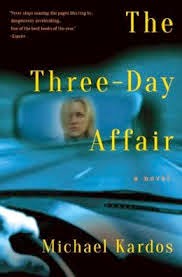
The Three-Day Affair by Michael Kardos
Six years ago, my bassist was shot dead in a New York nightclub.
Even though this line is of the back story variety, it is effective. We have some conflict in the form of a dead bassist and a character in the form of a narrator who, we may infer, has some musical tendencies. There is some setting thrown in for good measure. This is enough to navigate with and be pulled in by. The short prologue goes on to describe and explain the circumstance,s and before you can contemplate finishing, it is over. The reader is hooked. Unfortunately, it is a prologue and the writer will have to rehook in chapter 1, especially if the story starts in another time and place, like those annoying Cussler novel.
Chapter 1:
It almost didn't happen - the kidnapping and everything after.
This is preamble. The next line makes it go down a little easier.
That's the part that gets me, even now.
So as this is preamble that points towards some upcoming conflict in the form of a kidnapping that could have been avoided, what needs to happen next is dive right into this opening line. The next line:
The phone call came early Sunday morning, waking me out of a dead sleep.
Oops, two cliches: bed setting and phone call opening in one sentence. So this makes the opening preamble even more preambly, that is, something that was added in a later draft of the novel to make the cliches of bed and phone go down easier or even unnoticed. Not that I'm saying this author did it that way, but it feels like it. Sometimes that is where preamble comes from: a desperate attempt to spice up an otherwise mediocre opening line, paragraph or page.
First thing said:
"You're going to have to count me out, man."
This is still on the first page as the 4:55 AM conversation dances around a top secret plot point forcing the reader to read on if they care to find out what is going on. Then the caller decides that it wasn't a good idea to call and hangs up. So basically the reader learns that there is a problem but isn't told what it is. Personally, as I'm holding a novel, I don't need to be assured that there's a problem in this novel, that I will take for granted, as a story without conflict is no story. What I do want is the problem, and some, if not all, of the sordid details.
Verdict: Pass
I will give this three stars for the engaging prologue and writing style, but chapter 1 has the type of opening that's been done before - many times. No amount of preamble will fix that.
Sincerely,
Theodore Moracht
Even though this line is of the back story variety, it is effective. We have some conflict in the form of a dead bassist and a character in the form of a narrator who, we may infer, has some musical tendencies. There is some setting thrown in for good measure. This is enough to navigate with and be pulled in by. The short prologue goes on to describe and explain the circumstance,s and before you can contemplate finishing, it is over. The reader is hooked. Unfortunately, it is a prologue and the writer will have to rehook in chapter 1, especially if the story starts in another time and place, like those annoying Cussler novel.
Chapter 1:
It almost didn't happen - the kidnapping and everything after.
This is preamble. The next line makes it go down a little easier.
That's the part that gets me, even now.
So as this is preamble that points towards some upcoming conflict in the form of a kidnapping that could have been avoided, what needs to happen next is dive right into this opening line. The next line:
The phone call came early Sunday morning, waking me out of a dead sleep.
Oops, two cliches: bed setting and phone call opening in one sentence. So this makes the opening preamble even more preambly, that is, something that was added in a later draft of the novel to make the cliches of bed and phone go down easier or even unnoticed. Not that I'm saying this author did it that way, but it feels like it. Sometimes that is where preamble comes from: a desperate attempt to spice up an otherwise mediocre opening line, paragraph or page.
First thing said:
"You're going to have to count me out, man."
This is still on the first page as the 4:55 AM conversation dances around a top secret plot point forcing the reader to read on if they care to find out what is going on. Then the caller decides that it wasn't a good idea to call and hangs up. So basically the reader learns that there is a problem but isn't told what it is. Personally, as I'm holding a novel, I don't need to be assured that there's a problem in this novel, that I will take for granted, as a story without conflict is no story. What I do want is the problem, and some, if not all, of the sordid details.
Verdict: Pass
I will give this three stars for the engaging prologue and writing style, but chapter 1 has the type of opening that's been done before - many times. No amount of preamble will fix that.
Sincerely,
Theodore Moracht
Monday, 14 July 2014
The Resurrection of May Mabel McTavish by Allan Stratton
Mary Mabel's decision to kill herself wasn't taken lightly.
This is about all one can expect from an opening line. We have a character, a problem based on previous problems as of yet unknown. This line raises questions which is what a hook is all about. Why would this person wish to commit suicide? What happened in her life to want to take such a drastic measure; moreover, this decision wasn't taken lightly - she's obviously put a lot of thought into it, which raises more questions.
The next line establishes some queerness:
She'd considered it off and on ever since she was ten.
A child contemplating suicide makes said child/character readable. The rest of the paragraph describes setting but it isn't the boring type of setting that makes an opening fail, you know stuff like: It was a sunny day. We are introduced to the Academy for Young Ladies, Gothic with turrets, parapets, gargoyles and bats. Unfortunately, after paragraph 1 the narrative slides into a little too much back story for a page 1.
First thing said:
"Devil child."
The dialogue hereafter is well written, to the point and moves story forward and reveals character.
I like the title, even though it may not mean what I think it means, but that is fine for titles, even preferred, as there's nothing like a title to provide a little misdirection.
If it weren't for all the back story so early on, this opening would score higher.
Verdict: Pass
Sincerely,
Theodore Moracht
This is about all one can expect from an opening line. We have a character, a problem based on previous problems as of yet unknown. This line raises questions which is what a hook is all about. Why would this person wish to commit suicide? What happened in her life to want to take such a drastic measure; moreover, this decision wasn't taken lightly - she's obviously put a lot of thought into it, which raises more questions.
The next line establishes some queerness:
She'd considered it off and on ever since she was ten.
A child contemplating suicide makes said child/character readable. The rest of the paragraph describes setting but it isn't the boring type of setting that makes an opening fail, you know stuff like: It was a sunny day. We are introduced to the Academy for Young Ladies, Gothic with turrets, parapets, gargoyles and bats. Unfortunately, after paragraph 1 the narrative slides into a little too much back story for a page 1.
First thing said:
"Devil child."
The dialogue hereafter is well written, to the point and moves story forward and reveals character.
I like the title, even though it may not mean what I think it means, but that is fine for titles, even preferred, as there's nothing like a title to provide a little misdirection.
If it weren't for all the back story so early on, this opening would score higher.
Verdict: Pass
Sincerely,
Theodore Moracht
Saturday, 5 July 2014
The Other Typist by Suzanne Rindell
They said the typewriter would unsex us.
This is what one may consider a writer's opening line. It is a striking statement that is successful at doing what it is designed to do: attract attention. Anyone at a bookstore who comes across this book accidentally, and opens this to the first page and reads this line will most likely want to read the next and then the next until they find themselves wandering towards the cashier book in hand.
This line doesn't necessarily foreshadow a any particular conflict per say, but rather hints at the premise as the next paragraph explains:
One look at the device itself and you might understand how they - the self-appointed keepers of female virtue and morality, that is - might have reached such a conclusion.
I don't much like the POV switch, but that is my little pet peeve I've yet to come to terms with. This paragraph ends with:
Add to that the sheer violence of its iron arms, thwacking away at the page with unforgiving force. Unforgiving. Yes; forgiving is not the typewriter's duty.
One can't help think that the typewriter is a symbol for something. I'll let you to figure out what. The next paragrpah begins:
I don't suppose I know much about the business of forgiveness, either, as my job has so much to do with the other end of it. Confessions, I mean.
She works for the police and writes out reports on rape, robbery or whatever. Not things a lady was in the habit of being privy to in 1924.
There is more telling about the the life (back story and establishing character motivation) of the narrator and a return to the typewriter unsexing people until finally we come to a scene on page 8 and some dialogue.
First thing said:
"I'm not a ninny, you know."
I like the premise for this and the fact it is revealed early: a secretary to the police. I'm still not sure if this is a mystery or what (I don't read blurbs as they might affect the review process. I have this fear this is a romance or a combination of one with a mystery, but I will read on, as the beginning has pulled me in. Perhaps the time period has something to do with it, you know, the roaring twenties and all.
Verdict: Pass
Sincerely,
Theodore Moracht
This is what one may consider a writer's opening line. It is a striking statement that is successful at doing what it is designed to do: attract attention. Anyone at a bookstore who comes across this book accidentally, and opens this to the first page and reads this line will most likely want to read the next and then the next until they find themselves wandering towards the cashier book in hand.
This line doesn't necessarily foreshadow a any particular conflict per say, but rather hints at the premise as the next paragraph explains:
One look at the device itself and you might understand how they - the self-appointed keepers of female virtue and morality, that is - might have reached such a conclusion.
I don't much like the POV switch, but that is my little pet peeve I've yet to come to terms with. This paragraph ends with:
Add to that the sheer violence of its iron arms, thwacking away at the page with unforgiving force. Unforgiving. Yes; forgiving is not the typewriter's duty.
One can't help think that the typewriter is a symbol for something. I'll let you to figure out what. The next paragrpah begins:
I don't suppose I know much about the business of forgiveness, either, as my job has so much to do with the other end of it. Confessions, I mean.
She works for the police and writes out reports on rape, robbery or whatever. Not things a lady was in the habit of being privy to in 1924.
There is more telling about the the life (back story and establishing character motivation) of the narrator and a return to the typewriter unsexing people until finally we come to a scene on page 8 and some dialogue.
First thing said:
"I'm not a ninny, you know."
I like the premise for this and the fact it is revealed early: a secretary to the police. I'm still not sure if this is a mystery or what (I don't read blurbs as they might affect the review process. I have this fear this is a romance or a combination of one with a mystery, but I will read on, as the beginning has pulled me in. Perhaps the time period has something to do with it, you know, the roaring twenties and all.
Verdict: Pass
Sincerely,
Theodore Moracht
Tuesday, 1 July 2014
Anne of Green Gables by Lucy Maude Montgomery
Mrs. Rachel Lynde lived just where the Avonlea main road dipped down into a little hollow, fringed with alders and ladies' eardrops and traversed by a brook that had its source away back in the woods of the old Cuthbert place; it was reputed to be an intricate, headlong brook in its earlier course through those woods, with dark secrets of pool and cascade; but by the time it reached Lynde's Hollow it was a quiet, well-conducted little stream, for not even a brook could run past Mrs. Rachel Lynde's door without due regard for decency and decorum; it probably was conscious that Mrs. Rachel was sitting at her window, keeping a sharp eye on everything that passed, from brooks and children up, and that if she noticed anything odd or out of place she would never rest until she had ferreted out the whys and wherefores thereof.
This was written in the days when the where the story is happening was more important than what is happening. However, all is not as it seems with this opening that begins with setting. At first glance, the setting may be regraded as a drawback with its overdose of semicolons, but there is some nicely written prose here. More importantly, this opening takes advantage of the setting to introduce and establish the character of Mrs. Lynde,which is not a technique one reads every day.
The opening line begins idyllically enough until the stream reaches Mrs. Lynde's house. I like how the stream and perhaps all of nature, must behave according to Mrs. Lynde's sensibilities with due regard for decency and decorum. Adding that the stream must be conscious of where Mrs. Lynde is as she is a gossip and busybody. By making the river a character that is perhaps afraid of Mrs. Lynde, tone is established, subtly hyperbolic, much like one might find in a Harry Potter novel.
Right away we are made aware of the stark contrast between character and setting. The beautiful countryside of Prince Edward Island amidst the strictness of the Victorian age; this motif continues throughout the opening pages.
So, in this long sentence that sort of cheats with all the semicolons, we get some foreshadowing of conflict in that Mrs. Lynde is not the kind of person one can have much fun with and any child that comes in contact with her or those of her kind will suffer. Indeed, the next few pages are written, it seems, with only one purpose in mind: to drive the fear of Mrs. Lynde and perhaps adults in general into the hearts and minds of readers.
First thing said:
"I'll just step over to Green Gables after tea and find out from Marilla where he's gone and why."
So says Mrs. Lynde.
When Mrs. Lynde learns that Marilla's husband has gone to pick up an orphan to work on the farm, Mrs. Lynde expresses her fear of orphan children. Enter Anne.
Verdict: Pass
Sincerely,
Theodore Moracht
This was written in the days when the where the story is happening was more important than what is happening. However, all is not as it seems with this opening that begins with setting. At first glance, the setting may be regraded as a drawback with its overdose of semicolons, but there is some nicely written prose here. More importantly, this opening takes advantage of the setting to introduce and establish the character of Mrs. Lynde,which is not a technique one reads every day.
The opening line begins idyllically enough until the stream reaches Mrs. Lynde's house. I like how the stream and perhaps all of nature, must behave according to Mrs. Lynde's sensibilities with due regard for decency and decorum. Adding that the stream must be conscious of where Mrs. Lynde is as she is a gossip and busybody. By making the river a character that is perhaps afraid of Mrs. Lynde, tone is established, subtly hyperbolic, much like one might find in a Harry Potter novel.
Right away we are made aware of the stark contrast between character and setting. The beautiful countryside of Prince Edward Island amidst the strictness of the Victorian age; this motif continues throughout the opening pages.
So, in this long sentence that sort of cheats with all the semicolons, we get some foreshadowing of conflict in that Mrs. Lynde is not the kind of person one can have much fun with and any child that comes in contact with her or those of her kind will suffer. Indeed, the next few pages are written, it seems, with only one purpose in mind: to drive the fear of Mrs. Lynde and perhaps adults in general into the hearts and minds of readers.
First thing said:
"I'll just step over to Green Gables after tea and find out from Marilla where he's gone and why."
So says Mrs. Lynde.
When Mrs. Lynde learns that Marilla's husband has gone to pick up an orphan to work on the farm, Mrs. Lynde expresses her fear of orphan children. Enter Anne.
Verdict: Pass
Sincerely,
Theodore Moracht
Subscribe to:
Posts (Atom)


