The rusty iron staircase leading downstairs was narrow and steep.
After the all important introduction of a rusty staircase we get Mr. Pronoun feeling for the light switch. The opening paragraph is long and descriptive with heavy words designed to create an overwhelming sense of atmosphere akin to a 1970's B film Gothic epic - until a Bryan Adams' song starts playing, that is. Fortunately, we're not made privy to which.
First thing said:
"Hello, Snow White."
The point of the prologue is that Ms. Pronoun, called Snow White, must be kept hidden. We can infer she is dead, until the writer comes out and states this directly, for those who don't have a very high reading comprehension level. This pronoun must be a little weird for keeping a dead body and pretending it is still alive, talking to it, dreaming for it to smile. So there is a little mystery here that raises some questions. But as I've seen Psycho, I can't say I'm too shocked by this plot point. Truth be told, weirdos keeping dead bodies as companions is getting a bit cliche in fiction.
Chapter 1:
Thursday, November 6, 2008
He didn't say "See you later."
The reason why is apparent in the next line:
Nobody who was let out of the slammer ever said "See you later."
The pronounolgy is ripe in this opening. Mr. Pronoun is let out of prison. Not much conflict here, unless the guy is homicidal or something.
Setting is established first to establish mood. The pronounology only adds to this effect and is obviously intentional. Doing it this way may hook some readers, but in my experience and to my taste, it comes off as melodramatic and, well, cheesy.
Verdict: Pass (barely)
Sincerely,
Rudy Globird
Our critics, all suffering from extremely short attention spans, open random books in the library or bookstore and review the first line, paragraph and page (if it's really good). If we find we can't put it down, we might just review the whole first chapter. When we stumble upon a wonderful beginning, we read to the end to see if good writing really does go all the way.
Showing posts with label prologues. Show all posts
Friday, 10 October 2014
Wednesday, 17 September 2014
The Guardians by Andrew Pyper
Memory Diary
Entry No. 1
We watched them come in.
To celebrate the one-year anniversary of this blog we thought I would review another book by the author who started it all off. That time round he got a resounding epic fail for how he opened his 'award-winning' novel.
The opening line from this effort reads like an exercise in pronounology. It could be about anything, absolutely anything in the universe. We don't learn who 'we' are, but we do learn that 'they' are police officers going into a house. The first is one fat officer (stereotype intended?), who shows up. Whatever is in the house is disturbing, as fat cop comes out of the house transformed into sweaty fat cop. Fat cop calls it in and soon more police show up, an ambulance and fire trucks, before the body bags start coming out. This prologue ends:
A gulp of french fry, onion ring and chicken finger that, to this day, is the taste of death.
We remember all this, though still not everything.
And some of the things we remember may not have happened at all.
Huh? But that's it. We never learn what happened, or what this is about. Just bodies that the narrators may have remembered or may not have remembered because it may or may not have happened. It sounds like a writer just wrote a first draft of the opening of a story, and is still not sure what is going to happen next. However, the subtitle to this masked prologue explains more than the text. Whoever this 'we' pronoun is, they have memory problems, so one may reasonably infer. So this would have to be the opening hook, which serves to entice readers into the story, but may also warn them that there might be some ambiguity for a bit.
Plus, how does a gulp of food taste like death, as opposed to the food itself? Remove the propositional phrase of...etc., and we have this: A gulp is the taste of death.
Chapter 1:
The call comes in the middle of the night, as the worst sort do.
So this line works two opening cliches: the waking up or bed setting cliche and the phone call cliche.
First thing said:
"I don't even know what time it is."
This line sounds less awkward if that sentence and the next hadn't been separated with punctuation: "But it's late, isn't it?"
Then the voice is described, which is notable enough to add here:
A familiar voice, faintly slurred, helium-pitched between laughter and sobs.
This is another example of the descriptive style of this writer: It seems everything can be described as a series of contradictions co-existing within the being of each thing out there. Take the opening of the Demonologist:
Later when describing Ben, a guy who hung himself which is what the phone call is about, the narrator, Trev, talks about how Ben and he might ...have been separated by an ocean, or an even greater barrier, as impossible to cross as the chasm between planets, as death.
Then the next paragraph begins:
Despite this, we were still close. There was a love between us too. A sexless, stillborn love, yet just as fierce as the other kinds.
Yeah, right. Why can I not believe that or imagine that after the hyperbolic chasm description that is like as big as life and death? Hyperbolic chasm description might just be referring to distance, but I can't help but think it has more to do with personalities or the natures of the characters. There are certainly plenty of hints to suggest this is the case. We learn that what connects these two characters is a secret - a secret unknown even to Ben and Trev!
There are many contrary concepts in this writing that makes one wonder why one is even bothering to read. I suppose one could just ignore them if one reads fast enough or multitasks, you know, by thinking about what to have for dinner while reading.
Still the prologue and what we can infer from it and the fact that dialogue is used and a scene unfolds early on in chapter 1 gets this the 'meh' pass.
Verdict: Pass (barely)
Sincerely,
Rudy Globird
Entry No. 1
We watched them come in.
To celebrate the one-year anniversary of this blog we thought I would review another book by the author who started it all off. That time round he got a resounding epic fail for how he opened his 'award-winning' novel.
The opening line from this effort reads like an exercise in pronounology. It could be about anything, absolutely anything in the universe. We don't learn who 'we' are, but we do learn that 'they' are police officers going into a house. The first is one fat officer (stereotype intended?), who shows up. Whatever is in the house is disturbing, as fat cop comes out of the house transformed into sweaty fat cop. Fat cop calls it in and soon more police show up, an ambulance and fire trucks, before the body bags start coming out. This prologue ends:
A gulp of french fry, onion ring and chicken finger that, to this day, is the taste of death.
We remember all this, though still not everything.
And some of the things we remember may not have happened at all.
Huh? But that's it. We never learn what happened, or what this is about. Just bodies that the narrators may have remembered or may not have remembered because it may or may not have happened. It sounds like a writer just wrote a first draft of the opening of a story, and is still not sure what is going to happen next. However, the subtitle to this masked prologue explains more than the text. Whoever this 'we' pronoun is, they have memory problems, so one may reasonably infer. So this would have to be the opening hook, which serves to entice readers into the story, but may also warn them that there might be some ambiguity for a bit.
Plus, how does a gulp of food taste like death, as opposed to the food itself? Remove the propositional phrase of...etc., and we have this: A gulp is the taste of death.
Chapter 1:
The call comes in the middle of the night, as the worst sort do.
So this line works two opening cliches: the waking up or bed setting cliche and the phone call cliche.
First thing said:
"I don't even know what time it is."
This line sounds less awkward if that sentence and the next hadn't been separated with punctuation: "But it's late, isn't it?"
Then the voice is described, which is notable enough to add here:
A familiar voice, faintly slurred, helium-pitched between laughter and sobs.
This is another example of the descriptive style of this writer: It seems everything can be described as a series of contradictions co-existing within the being of each thing out there. Take the opening of the Demonologist:
Last night I had the dream again. Except it was not a dream.
Later when describing Ben, a guy who hung himself which is what the phone call is about, the narrator, Trev, talks about how Ben and he might ...have been separated by an ocean, or an even greater barrier, as impossible to cross as the chasm between planets, as death.
Then the next paragraph begins:
Despite this, we were still close. There was a love between us too. A sexless, stillborn love, yet just as fierce as the other kinds.
Yeah, right. Why can I not believe that or imagine that after the hyperbolic chasm description that is like as big as life and death? Hyperbolic chasm description might just be referring to distance, but I can't help but think it has more to do with personalities or the natures of the characters. There are certainly plenty of hints to suggest this is the case. We learn that what connects these two characters is a secret - a secret unknown even to Ben and Trev!
There are many contrary concepts in this writing that makes one wonder why one is even bothering to read. I suppose one could just ignore them if one reads fast enough or multitasks, you know, by thinking about what to have for dinner while reading.
Still the prologue and what we can infer from it and the fact that dialogue is used and a scene unfolds early on in chapter 1 gets this the 'meh' pass.
Verdict: Pass (barely)
Sincerely,
Rudy Globird
Tuesday, 16 September 2014
Savage Girl by Jean Zimmerman
Prologue
Manhattan. May 19, 1876
I wait for the police in the study overlooking Gramercy Park, the body prone on the floor a few feet away.
A problem and a character in the opening line cannot fail to make one read on, which is what each line in a story should do: make readers want to read the next one, so onto the next line:
Outside, rain has cooled the green spring evening.
Unfortunately, this human weakness of succumbing to cliche rears its ugly head in this novel as it does in millions of others. The next paragraph talks about and describes the room this pronoun is in, which is not what the reader wants. The reader wants to know about the body, not the real estate agent's tour of the place. I understand that authors do this to build suspense, done by not revealing what the reader wants revealed right away, but I've always said that that is a rather hackneyed way of creating suspense, sort of suspense by procrastination. A little is fine and may be quite effective; a lot is annoying and feels like wasting readers' time by toying with them. In this case, it is thankfully short and in the next paragraph we return to the body and the interesting circumstances surrounding it, which are: Either 'she' killed 'him' or the narrator killed him but has no memory of it. The use of pronouns bugs me, I can infer more about the dead person than the living in this opening.
While still on the first page the narrator explains that whether it was 'she' who killed him or 'I' who killed him, the narrator is going to take the blame and therefore must wait in the room while contemplating what to do to the body until he/she/it is caught red-handed. The circumstances are unusual enough to pull readers in and it's nice that the hook is so soon. However....this is the prologue, an attachment to the beginning of a story. Chapter 1, where a story is officially supposed to begin rarely continues where a prologue left off, if it did, then the prologue would be chapter 1 and chapter 1 would be chapter 2.
Chapter 1:
In June of 1875, we made our way down Virginia City's "A" Street, proceeding south from the center of town towards the mountains.
As was expected the opening of chapter 1 does not continue the action of the prologue but instead goes back in time to tell the story that leads to the prologue which one can assume will be a climactic moment in the novel later on, or thereabouts. On top of that, we have the walking cliche here, characters travelling to the beginning of the story and conflict. It goes on to explain who the people are that are walking and I lose interest. I'm not the only one; the library copy I have has the page folded after the prologue. Someone else stopped after reading the prologue, thinking that chapter 1 was for another day. Too bad, I really liked that prologue, despite the split infinitive.
First thing said:
"Where is it?"
Verdict: Pass (barely)
A deeply anticlimatic chapter 1 and a couple of cliches reduces the rating of this opening.
Sincerely,
Theodore Moracht
Manhattan. May 19, 1876
I wait for the police in the study overlooking Gramercy Park, the body prone on the floor a few feet away.
A problem and a character in the opening line cannot fail to make one read on, which is what each line in a story should do: make readers want to read the next one, so onto the next line:
Outside, rain has cooled the green spring evening.
Unfortunately, this human weakness of succumbing to cliche rears its ugly head in this novel as it does in millions of others. The next paragraph talks about and describes the room this pronoun is in, which is not what the reader wants. The reader wants to know about the body, not the real estate agent's tour of the place. I understand that authors do this to build suspense, done by not revealing what the reader wants revealed right away, but I've always said that that is a rather hackneyed way of creating suspense, sort of suspense by procrastination. A little is fine and may be quite effective; a lot is annoying and feels like wasting readers' time by toying with them. In this case, it is thankfully short and in the next paragraph we return to the body and the interesting circumstances surrounding it, which are: Either 'she' killed 'him' or the narrator killed him but has no memory of it. The use of pronouns bugs me, I can infer more about the dead person than the living in this opening.
While still on the first page the narrator explains that whether it was 'she' who killed him or 'I' who killed him, the narrator is going to take the blame and therefore must wait in the room while contemplating what to do to the body until he/she/it is caught red-handed. The circumstances are unusual enough to pull readers in and it's nice that the hook is so soon. However....this is the prologue, an attachment to the beginning of a story. Chapter 1, where a story is officially supposed to begin rarely continues where a prologue left off, if it did, then the prologue would be chapter 1 and chapter 1 would be chapter 2.
Chapter 1:
In June of 1875, we made our way down Virginia City's "A" Street, proceeding south from the center of town towards the mountains.
As was expected the opening of chapter 1 does not continue the action of the prologue but instead goes back in time to tell the story that leads to the prologue which one can assume will be a climactic moment in the novel later on, or thereabouts. On top of that, we have the walking cliche here, characters travelling to the beginning of the story and conflict. It goes on to explain who the people are that are walking and I lose interest. I'm not the only one; the library copy I have has the page folded after the prologue. Someone else stopped after reading the prologue, thinking that chapter 1 was for another day. Too bad, I really liked that prologue, despite the split infinitive.
First thing said:
"Where is it?"
Verdict: Pass (barely)
A deeply anticlimatic chapter 1 and a couple of cliches reduces the rating of this opening.
Sincerely,
Theodore Moracht
Friday, 12 September 2014
Death of a Scholar by Susanna Gregory
Cambridge, Lammas Day (1 August) 1358
Oswald Stanmore knew he was dying.
There is not as much conflict here as people may think. I mean, we all die. If the line was something like: He knew he would die, then that would raise more questions. However, in this first paragraph of this prologue, we learn that Oswald has some secrets and has been a naughty boy and needs to destroy any evidence of his wrongdoings before he begins the arduous task of concentrating on his immortal soul. So we do get a hook in the first paragraph, which is not to say that the opening line fails, it's a great leading line.
Chapter 1
It was an inauspicious start for a new College.
This line, however, has a whiff of preamble to it. A big stink of preamble, actually, giving the opening line a watered-down vague character to it. The next line is where the story starts and would have made a much more powerful opening line, as it has character and conflict:
Geoffrey de Elvesmere of Winwick Hall lay dead in the latrine, sprawled inelegantly with his clothes in disarray around him.
I like the euphemistic phrase: sprawled inelegantly. Quickly we are presented with a body and a problem in the first paragraph of chapter 1. We learn something about the victim and the detective Matthew Bartholomew all in the first paragraph. Geoffrey would have been horrified at the spectacle he was providing for gawping onlookers. Readers are no different then those onlookers and out of curiosity read on.
First thing said:
"Marsh fever."
This comes in the prologue and moves the plot forward a little, which makes for effective dialogue in an opening. In this case, it reveals what is supposed to be ailing Oswald. He knows differently, though.
Verdict: Pass (Definitely)
For those who love mysteries there is enough mystery in the opening to hook. For those who love historical, there is enough history in the opening to hook. I like the writing style, but that's no surprise as it's coming from a UKer. So this gets a 3.5 stars out of 5.
Sincerely,
Theodore Moracht
Oswald Stanmore knew he was dying.
There is not as much conflict here as people may think. I mean, we all die. If the line was something like: He knew he would die, then that would raise more questions. However, in this first paragraph of this prologue, we learn that Oswald has some secrets and has been a naughty boy and needs to destroy any evidence of his wrongdoings before he begins the arduous task of concentrating on his immortal soul. So we do get a hook in the first paragraph, which is not to say that the opening line fails, it's a great leading line.
Chapter 1
It was an inauspicious start for a new College.
This line, however, has a whiff of preamble to it. A big stink of preamble, actually, giving the opening line a watered-down vague character to it. The next line is where the story starts and would have made a much more powerful opening line, as it has character and conflict:
Geoffrey de Elvesmere of Winwick Hall lay dead in the latrine, sprawled inelegantly with his clothes in disarray around him.
I like the euphemistic phrase: sprawled inelegantly. Quickly we are presented with a body and a problem in the first paragraph of chapter 1. We learn something about the victim and the detective Matthew Bartholomew all in the first paragraph. Geoffrey would have been horrified at the spectacle he was providing for gawping onlookers. Readers are no different then those onlookers and out of curiosity read on.
First thing said:
"Marsh fever."
This comes in the prologue and moves the plot forward a little, which makes for effective dialogue in an opening. In this case, it reveals what is supposed to be ailing Oswald. He knows differently, though.
Verdict: Pass (Definitely)
For those who love mysteries there is enough mystery in the opening to hook. For those who love historical, there is enough history in the opening to hook. I like the writing style, but that's no surprise as it's coming from a UKer. So this gets a 3.5 stars out of 5.
Sincerely,
Theodore Moracht
Tuesday, 9 September 2014
Shame and the Captives by Thomas Keneally
Autumn 1946
Japan, unspecified prefecture
When they were alone, she said to Aoki, "You were surrounded by those black savages...All that time you had in the jungle..."
I will take all this as the opening line of an unidentified prologue even though it is two lines fused together with a gluttony of ellipses. This line manages to introduce a situation though without a clear conflict in mind, but certainly presents possibilities for a hook.
In the next paragraph we learn that she is asking him if he succumbed to the jungle women, one presumes during WWII, and he answers that he was a soldier, implying that he did not. At this point I sense a massive flashback in which he tells his story of the war. He does, but the great thing is that the story he tells his wife is a lie. The reader is told that he's hiding something and this secret is a hook.
Part 1:
Spring 1943
On an unexpectedly warm day in the second October since her husband's capture, twenty-three-year-old Mrs Alice Herman saw - from the veranda where she sat sewing buttons on one of her father-in-law's shirts - an army truck pull up in the middle of the rutted clay and gravel road outside the Hermans' place, three miles west of Gawell.
That was very annoying to type out. Reading it is more fun, but when one is forced to type it out, it becomes clear how much of this sentence is unnecessary. I was itching to truncate or delete more than the standard 10%. Short opening lines with character and conflict are the way to go. This line seems to be more interested in creating an idyllic postcard image, that's designed to warn the reader that this story is going to be romantic and epic, like how a TV miniseries would start.
This is what it is really about:
In the second October since her husband's capture, Mrs Alice Herman saw an army truck pull up outside.
Who cares what the temperature is? Who cares that she is sewing? Who cares that the bloody road is of rutted clay. Who cares that she lives three miles west of God knows where? Maybe there will be a reason to care later, but when it's necessary to know later, that is when the writer tells the reader, not overloading the reader with a descriptive dump in the first line. Too many words in the opening line, like weather reports, adjectives, and GPS dumps, etc., have the tendency to lead a reader away from the hook rather than towards it.
Though brief, quite honestly, the weather insertion is annoying. It seems every second book I pick up nowadays begins with weather. There is only so much weather readers can handle before they start to OD on it. I'm at the point now where I have no sympathy and no respect for any writer who begins with weather - the most rampant cliched opening on the market today, so if writers can't be more creative, I feel justified in throwing insolence and ridicule their way while reviewing such openings.
In any case, this line does present context which establishes some conflict into the bargain. Army men coming to a woman whose husband is a POW is probably not a good thing. Is it enough to hook? It does raise some questions, and I must admit I am mildly curious as to what is or will be Mr. Herman's fate, even though I can't say I yet care. I'm more interested in the situation than in the characters. I care more about the characters in the prologue, but that is a prologue: different people in a different place in a different time. So whatever hook there was in the prologue is wasted on chapter 1.
For reasons mentioned above, I'm so tempted to give this 2.5 stars - the 50/50 meh rating, but there are some questions raised that induce curiosity and the writing isn't bad, so I'll be kind and give this opening a solid 3 stars.
Verdict: Pass
Sincerely,
Theodore Moracht
Japan, unspecified prefecture
When they were alone, she said to Aoki, "You were surrounded by those black savages...All that time you had in the jungle..."
I will take all this as the opening line of an unidentified prologue even though it is two lines fused together with a gluttony of ellipses. This line manages to introduce a situation though without a clear conflict in mind, but certainly presents possibilities for a hook.
In the next paragraph we learn that she is asking him if he succumbed to the jungle women, one presumes during WWII, and he answers that he was a soldier, implying that he did not. At this point I sense a massive flashback in which he tells his story of the war. He does, but the great thing is that the story he tells his wife is a lie. The reader is told that he's hiding something and this secret is a hook.
Part 1:
Spring 1943
On an unexpectedly warm day in the second October since her husband's capture, twenty-three-year-old Mrs Alice Herman saw - from the veranda where she sat sewing buttons on one of her father-in-law's shirts - an army truck pull up in the middle of the rutted clay and gravel road outside the Hermans' place, three miles west of Gawell.
That was very annoying to type out. Reading it is more fun, but when one is forced to type it out, it becomes clear how much of this sentence is unnecessary. I was itching to truncate or delete more than the standard 10%. Short opening lines with character and conflict are the way to go. This line seems to be more interested in creating an idyllic postcard image, that's designed to warn the reader that this story is going to be romantic and epic, like how a TV miniseries would start.
This is what it is really about:
In the second October since her husband's capture, Mrs Alice Herman saw an army truck pull up outside.
Who cares what the temperature is? Who cares that she is sewing? Who cares that the bloody road is of rutted clay. Who cares that she lives three miles west of God knows where? Maybe there will be a reason to care later, but when it's necessary to know later, that is when the writer tells the reader, not overloading the reader with a descriptive dump in the first line. Too many words in the opening line, like weather reports, adjectives, and GPS dumps, etc., have the tendency to lead a reader away from the hook rather than towards it.
Though brief, quite honestly, the weather insertion is annoying. It seems every second book I pick up nowadays begins with weather. There is only so much weather readers can handle before they start to OD on it. I'm at the point now where I have no sympathy and no respect for any writer who begins with weather - the most rampant cliched opening on the market today, so if writers can't be more creative, I feel justified in throwing insolence and ridicule their way while reviewing such openings.
In any case, this line does present context which establishes some conflict into the bargain. Army men coming to a woman whose husband is a POW is probably not a good thing. Is it enough to hook? It does raise some questions, and I must admit I am mildly curious as to what is or will be Mr. Herman's fate, even though I can't say I yet care. I'm more interested in the situation than in the characters. I care more about the characters in the prologue, but that is a prologue: different people in a different place in a different time. So whatever hook there was in the prologue is wasted on chapter 1.
For reasons mentioned above, I'm so tempted to give this 2.5 stars - the 50/50 meh rating, but there are some questions raised that induce curiosity and the writing isn't bad, so I'll be kind and give this opening a solid 3 stars.
Verdict: Pass
Sincerely,
Theodore Moracht
Friday, 5 September 2014
The Last Romanov by Dora Levy Mossanen
The howls of wild aurochs echo deep in the ancient forest as Boris Spiridov spreads his hunting coat over a mattress of leaves and Sabrina Josephine, daughter of a grand duke and favorite in the Romanov Palace squats down as if she has spent her entire life in this forest.
This is the first sentence of what appears to be a preface or prologue. It is short, only five more sentences, but the opening line is long. If you don't believe me, try writing it out a hundred times on the board. Personally, I like adjectives but when they are used willy-nilly as in ancient forest, I begin to wonder. So the forest is ancient. What does an ancient forest look like? Like the Redwoods of California? That's pretty ancient. But from the names given we can assume this is in Russia, so what does an ancient forest look like in Russia? How is the reader to know? How is the reader to form an image, which the author obviously wants the reader to do, as she's using adjectives for a reason. Or is she? Ancient could look like many different things, even though almost all forests are pretty old relative to the people that populate them. So in point of fact, ancient used in this sentence is like deadwood.
As well, what is the difference in squatting between someone who has not been in a forest forever and someone who has? Is there some special pose that I should be aware of? Again, there is a push to create an image in the reader's mind but fails to do so concretely...or even vaguely for that matter.
By the end of this short prologue we learn that a baby has been born.
Chapter 1:
Darya Borisovna Spiridova is startled awake by a persistent knock at her front door.
So this begins with a character waking up. A cliched and therefore quite noncreative way to begin a story. The next lines are curious:
Butterflies flutter against her skin, weave their way around her silver curls, rustle under the covers. A cloud of butterflies floats out of the bedroom and into the vestibule.
I can't tell if this is a metaphor or to be taken literally. In any case, the image is funny; I'm reminded of a scene from Ace Ventura. I read on for this reason but lose interest as the narrative descends into back story with Russian words interspersed to create a sense of place.
First thing said:
"May I help you, Madame?"
Despite my criticism above, there is a scene in the opening, though it takes a while for something meaningful to happen.
Verdict: Fail
Sincerely,
Theodore Moracht
Thursday, 4 September 2014
Mean Streak by Sandra Brown
Emory hurt all over.
This sentence has all the ingredients of a good hook - almost. It's short, which is good. There's a name instead of a pronoun, which is good. Hurting is good, as it suggests something is not right. However, hurting is not that unusual so although this is a hook of sorts, it's fairly weak. Next line:
It hurt even to breathe.
This clarifies the hurting a bit to suggest that this pain is probably serious. The next paragraph is a weather report, so not much time, ink or paper is wasted to get to that cliche. It's cold and Emory is underdressed. The fact she's not dressed properly makes the weather report not entirely superfluous. If the writer only stated she was underdressed without stating the cold, readers wouldn't have had enough information to understand the conflict, so weather here is okay, but the weathery description could have been shortened a bit.
This short prologue follows someone in the middle of nowhere, with a fractured foot running from something or someone, until the end when pain skyrockets through her skull. We are left wondering: Did she die or not? So there are a couple questions raised.
Chapter 1:
"Does it hurt this much?"
This is also the first thing said in the novel. Dr. Emory is saying this so the reader is left wondering if this is the same Emory from the prologue and if so are the events in the prologue before or after the events of chapter 1. If not, how many Emorys are there in this book?
The scene is a little dull. A little girl has an earache and Dr. Emory is checking her out. It's not much of anything except a character building scene which reveals that Emory is going away for the weekend, perhaps to the scene of the prologue?
Verdict: Pass (barely)
Sincerely,
Rudy Globird
This sentence has all the ingredients of a good hook - almost. It's short, which is good. There's a name instead of a pronoun, which is good. Hurting is good, as it suggests something is not right. However, hurting is not that unusual so although this is a hook of sorts, it's fairly weak. Next line:
It hurt even to breathe.
This clarifies the hurting a bit to suggest that this pain is probably serious. The next paragraph is a weather report, so not much time, ink or paper is wasted to get to that cliche. It's cold and Emory is underdressed. The fact she's not dressed properly makes the weather report not entirely superfluous. If the writer only stated she was underdressed without stating the cold, readers wouldn't have had enough information to understand the conflict, so weather here is okay, but the weathery description could have been shortened a bit.
This short prologue follows someone in the middle of nowhere, with a fractured foot running from something or someone, until the end when pain skyrockets through her skull. We are left wondering: Did she die or not? So there are a couple questions raised.
Chapter 1:
"Does it hurt this much?"
This is also the first thing said in the novel. Dr. Emory is saying this so the reader is left wondering if this is the same Emory from the prologue and if so are the events in the prologue before or after the events of chapter 1. If not, how many Emorys are there in this book?
The scene is a little dull. A little girl has an earache and Dr. Emory is checking her out. It's not much of anything except a character building scene which reveals that Emory is going away for the weekend, perhaps to the scene of the prologue?
Verdict: Pass (barely)
Sincerely,
Rudy Globird
Wednesday, 3 September 2014
Peter Pan Must Die by John Verdon
Long Before the Killing Began
There was a time when he dreamt of being the head of a great nation.
Obviously this writer's strength lies in creating great titles and subtitles. In regards to the opening line, it has a hint of preamble. There isn't much difference between There was a time... and Once upon a time.... Is there?
Then the final sentence fragment of the first paragraph of the prologue, inserted like a thundering PS with a drum roll, is:
A nuclear power.
Then:
As president, he would have his finger on the nuclear trigger. With a twitch of that finger he could launch nuclear missiles... He could put an end to the human stink.
It's nice when a story starts with such a sympathetic pronoun. Come on, let's admit it, we've all felt this kind of rage and have all dreamed about there being fewer people around at some point in our lives. Actually, there is something to be said about starting off with the antagonist - and I assume this is the antagonist as I don't think too many people would be rooting for a sociopath protagonist wishing he could blow up the world. Beginning with a disturbed bad guy is a pretty common thing to do in prologues though.
Then we learn this pronoun has issues with The Nightmare (my capitalization) and a wheezing clown that hurts this pronoun for money. Honestly, this sort of hooks me, but alas, it is the prologue and the next page which is chapter 1 has absolutely nothing to do with the prologue, so I can't really be bothered to read on.
Chapter 1:
In the rural Catskill Mountains of upstate New York, August was an unstable month, lurching back and forth between the bright glories of July and the gray squalls of the long winter to come.
So we get some weather in the opening line. Nothing much interesting in this. However, the writer tries (rather feebly in my opinion) to connect this ...month that could erode one's sense of time and place to feeding a character's confusion, or more accurately, at least seeming to. That is to say, the weather is used to introduce a character's state of mind, whose name is, um, Gurney. Anyone like a metaphor with their cup of characterization?
Then we're thrown into some moldy back story about retirement, the wife, moving and kids. It's brief though, so that's good. Unfortunately, it's interrupted with more weather to begin paragraph 3.
First thing said:
"This is our secret."
This is what is said in the Nightmare. First thing a verified character says:
"Is that a tarn?"
By golly, I think it is. However, the characters are not sure and need to discuss it for a bit.
Verdict: Fail
I love the title. If I was reviewing just the title (As I get lazier, I just might start doing that), I'd give this five stars.
Sincerely,
Theodore Moracht
There was a time when he dreamt of being the head of a great nation.
Obviously this writer's strength lies in creating great titles and subtitles. In regards to the opening line, it has a hint of preamble. There isn't much difference between There was a time... and Once upon a time.... Is there?
Then the final sentence fragment of the first paragraph of the prologue, inserted like a thundering PS with a drum roll, is:
A nuclear power.
Then:
As president, he would have his finger on the nuclear trigger. With a twitch of that finger he could launch nuclear missiles... He could put an end to the human stink.
It's nice when a story starts with such a sympathetic pronoun. Come on, let's admit it, we've all felt this kind of rage and have all dreamed about there being fewer people around at some point in our lives. Actually, there is something to be said about starting off with the antagonist - and I assume this is the antagonist as I don't think too many people would be rooting for a sociopath protagonist wishing he could blow up the world. Beginning with a disturbed bad guy is a pretty common thing to do in prologues though.
Then we learn this pronoun has issues with The Nightmare (my capitalization) and a wheezing clown that hurts this pronoun for money. Honestly, this sort of hooks me, but alas, it is the prologue and the next page which is chapter 1 has absolutely nothing to do with the prologue, so I can't really be bothered to read on.
Chapter 1:
In the rural Catskill Mountains of upstate New York, August was an unstable month, lurching back and forth between the bright glories of July and the gray squalls of the long winter to come.
So we get some weather in the opening line. Nothing much interesting in this. However, the writer tries (rather feebly in my opinion) to connect this ...month that could erode one's sense of time and place to feeding a character's confusion, or more accurately, at least seeming to. That is to say, the weather is used to introduce a character's state of mind, whose name is, um, Gurney. Anyone like a metaphor with their cup of characterization?
Then we're thrown into some moldy back story about retirement, the wife, moving and kids. It's brief though, so that's good. Unfortunately, it's interrupted with more weather to begin paragraph 3.
First thing said:
"This is our secret."
This is what is said in the Nightmare. First thing a verified character says:
"Is that a tarn?"
By golly, I think it is. However, the characters are not sure and need to discuss it for a bit.
Verdict: Fail
I love the title. If I was reviewing just the title (As I get lazier, I just might start doing that), I'd give this five stars.
Sincerely,
Theodore Moracht
Tuesday, 2 September 2014
Sandman by Lars Kepler
It's the middle of the night, and the snow is blowing in from the sea.
I don't particularly want to review another opening from this author, but this is what landed on my desk, so to speak, so here it is. This is the beginning of some sort of unidentified prologue that is printed in italics, which I find annoying, as if every word is being stressed. The weather cliche is used here to poor effect. The next line introduces a character walking across a bridge. Then we get the third line:
His jeans are stiff with frozen blood.
So a little bit of a problem is introduced here. Yet a couple sentences later we learn that warm blood is trickling down the man's arm. And even later while still on the same page we learn that the man's clothes are flapping around his body - I assume all his clothes except for the stiff jeans? Anyway, we learn this guy has been declared dead, so there is a little hook at the end of this super short prelude.
Chapter 1:
Secure Criminal Psychology Unit
Lowenstromska Hospital
The steel gate closes behind the new doctor with a heavy clang.
After this mundane sentence of a closing door, there is another sentence about the echoing clang. Then a shiver down the spine of the doctor and then some back story about a patient and how long he's been incarcerated before returning to the doctor walking through the facility towards said mental patient.
This opening sets up all right, I suppose. We learn that the doctor is new and where he is, which provides enough material to begin to see how this opening might actually at some point later in the story lead to conflict.
First thing said:
"Jurek Walter must never be alone with any member of staff."
Dialogue that moves plot forward and reveals some character is good. Bonus that this comes early, on the second page of chapter 1.
Verdict: Pass (barely)
Finally, the author gets a pass, though, just barely. I think it has to do with the subtitle in chapter 1: Secure Criminal Psychology Unit and subsequent setting, and not because of a bloodied prologie, which is not that interesting.
Sincerely,
Rudy Globird
I don't particularly want to review another opening from this author, but this is what landed on my desk, so to speak, so here it is. This is the beginning of some sort of unidentified prologue that is printed in italics, which I find annoying, as if every word is being stressed. The weather cliche is used here to poor effect. The next line introduces a character walking across a bridge. Then we get the third line:
His jeans are stiff with frozen blood.
So a little bit of a problem is introduced here. Yet a couple sentences later we learn that warm blood is trickling down the man's arm. And even later while still on the same page we learn that the man's clothes are flapping around his body - I assume all his clothes except for the stiff jeans? Anyway, we learn this guy has been declared dead, so there is a little hook at the end of this super short prelude.
Chapter 1:
Secure Criminal Psychology Unit
Lowenstromska Hospital
The steel gate closes behind the new doctor with a heavy clang.
After this mundane sentence of a closing door, there is another sentence about the echoing clang. Then a shiver down the spine of the doctor and then some back story about a patient and how long he's been incarcerated before returning to the doctor walking through the facility towards said mental patient.
This opening sets up all right, I suppose. We learn that the doctor is new and where he is, which provides enough material to begin to see how this opening might actually at some point later in the story lead to conflict.
First thing said:
"Jurek Walter must never be alone with any member of staff."
Dialogue that moves plot forward and reveals some character is good. Bonus that this comes early, on the second page of chapter 1.
Verdict: Pass (barely)
Finally, the author gets a pass, though, just barely. I think it has to do with the subtitle in chapter 1: Secure Criminal Psychology Unit and subsequent setting, and not because of a bloodied prologie, which is not that interesting.
Sincerely,
Rudy Globird
Monday, 25 August 2014
Fear Nothing by Lisa Gardner
Prologue
Rockabye, baby, on a treetop....
This counts as the first sentence or sentence fragment of the book. To some it might seem creepy and acceptable as an opening, perhaps establishing tone or mood. Not me, though. It's just a nursery rhyme I've heard a million times or thereabouts.
The next sentence shows promise, though how it relates to the opening line is a mystery, and therefore raises a question, but not the kind of question that hooks, not a story question, but a what-is-this-author-doing question. It's that kind of question that evaporates a hook.
The body was gone, but not the smell.
A crime scene is revealed, hence a crime is introduced. Unfortunately, it's broken up with more of that annoying nursery rhyme, that makes me roll my eyes and think of old-school 1980's phlegm horror.
Chapter 1:
My older sister discovered my condition when I was three years old.
Preamble that does nothing but promises back story. Pure exposition. The next line is the hook:
Our foster mother walked in on her wielding the scissors, while I stood there, bare arms obediently held out, blood dripping from my wrists onto the olive-green shag carpet.
Then the first thing said:
"Check it out, she doesn't even care."
Dialogue that reveals character and moves plot forward is good writing. Even though this beginning is technically a flashback and not a part of a forward narrative, its gruesomeness and the information provided is of the need-to-know variety. We learn that the narrator does not feel physical pain. Such unusual characters usually make for pleasant reading.
There are questions raised in this opening and the fact it is cliche free (no weather, guns, cars, beds, dreams, etc,) makes this opening hookable.
Verdict: Pass
Sincerely,
Theodore Moracht
Rockabye, baby, on a treetop....
This counts as the first sentence or sentence fragment of the book. To some it might seem creepy and acceptable as an opening, perhaps establishing tone or mood. Not me, though. It's just a nursery rhyme I've heard a million times or thereabouts.
The next sentence shows promise, though how it relates to the opening line is a mystery, and therefore raises a question, but not the kind of question that hooks, not a story question, but a what-is-this-author-doing question. It's that kind of question that evaporates a hook.
The body was gone, but not the smell.
A crime scene is revealed, hence a crime is introduced. Unfortunately, it's broken up with more of that annoying nursery rhyme, that makes me roll my eyes and think of old-school 1980's phlegm horror.
Chapter 1:
My older sister discovered my condition when I was three years old.
Preamble that does nothing but promises back story. Pure exposition. The next line is the hook:
Our foster mother walked in on her wielding the scissors, while I stood there, bare arms obediently held out, blood dripping from my wrists onto the olive-green shag carpet.
Then the first thing said:
"Check it out, she doesn't even care."
Dialogue that reveals character and moves plot forward is good writing. Even though this beginning is technically a flashback and not a part of a forward narrative, its gruesomeness and the information provided is of the need-to-know variety. We learn that the narrator does not feel physical pain. Such unusual characters usually make for pleasant reading.
There are questions raised in this opening and the fact it is cliche free (no weather, guns, cars, beds, dreams, etc,) makes this opening hookable.
Verdict: Pass
Sincerely,
Theodore Moracht
Friday, 22 August 2014
Where the Air is Sweet by Tasneem Jamal
Prologue
Apollo Hotel, Kampala
August 1974
The swimming pool is circular, with a platform on one side that juts into the water.
Hooked yet? Didn't think so. With a title like Where the Air is Sweet we know that this is artsy-fartsy. The Artsy-Fartsy connoisseur will adore this opening. Circular swimming pool, you say? Could this be a metaphor for life, an expression of the futile yet malignant obsession of the human spirit to overthrow the cancerous mediocrity that threatens growth and happiness, despite there always being a way...out: A platform. It juts. ...into the water...
I apologize, I'm being facetious. I blame the artsy-fartsy title. My brain reacts violently to them; you know, ones that begin with an ellipsis..., or begin with a preposition or has a pronoun like: A River Runs through IT or a title that begins with 'And'. Then there are the ones that begin with where, when or how. Not that I have anything against artsy-fartsy - I have the prerequisite brain capacity and/or human compassion to appreciate them - it's just that these books tend to be didactic and long-winded with vocabulary that's been excavated from the depths of the armpits of some dictionary, bursting with imagery that tries to reprogram (or scramble) my brain, by making something as simple as the sun look like the last vestibule of hope in the eye of a dying impediment. Moreover, the pacing is soooooooo slowwwww.
The rest of the paragraph mentions a past event littered with sentence fragments, a feature of artsy fartsy.
A concrete peninsula.
In Swahili.
In English.
In Luganda.
Fragments.
If you like you're sentences thus...
Love.
This book.
Paragraph 2 begins with description, a fashion report before describing a scene of people swimming in the pool. Hooked yet? Yes? No? Good for you.
Paragraph 3 is the artsy-fartsy weather report and I imagine a beatnik Stewie reading this:
A cloud obscures the sun and everything is grey. Dull. Diminished. As though, on a cruel whim, God lifted his hand and smeared the earth with ash.
Snap fingers. Snap fingers.
The fact that it's in present tense doesn't help.
First thing said:
"Again."
Verdict: Fail
In general, artsy-fartsy books aren't written with hooking in mind, so it isn't fair to review them on this blog. I do it though because it's fun. I sometimes wonder if someone's playing a joke on the publishing industry and that Monty Python fanatics are secretly writing these books while spanking each other with fish.
Sincerely,
Rudy Globird
Apollo Hotel, Kampala
August 1974
The swimming pool is circular, with a platform on one side that juts into the water.
Hooked yet? Didn't think so. With a title like Where the Air is Sweet we know that this is artsy-fartsy. The Artsy-Fartsy connoisseur will adore this opening. Circular swimming pool, you say? Could this be a metaphor for life, an expression of the futile yet malignant obsession of the human spirit to overthrow the cancerous mediocrity that threatens growth and happiness, despite there always being a way...out: A platform. It juts. ...into the water...
I apologize, I'm being facetious. I blame the artsy-fartsy title. My brain reacts violently to them; you know, ones that begin with an ellipsis..., or begin with a preposition or has a pronoun like: A River Runs through IT or a title that begins with 'And'. Then there are the ones that begin with where, when or how. Not that I have anything against artsy-fartsy - I have the prerequisite brain capacity and/or human compassion to appreciate them - it's just that these books tend to be didactic and long-winded with vocabulary that's been excavated from the depths of the armpits of some dictionary, bursting with imagery that tries to reprogram (or scramble) my brain, by making something as simple as the sun look like the last vestibule of hope in the eye of a dying impediment. Moreover, the pacing is soooooooo slowwwww.
The rest of the paragraph mentions a past event littered with sentence fragments, a feature of artsy fartsy.
A concrete peninsula.
In Swahili.
In English.
In Luganda.
Fragments.
If you like you're sentences thus...
Love.
This book.
Paragraph 2 begins with description, a fashion report before describing a scene of people swimming in the pool. Hooked yet? Yes? No? Good for you.
Paragraph 3 is the artsy-fartsy weather report and I imagine a beatnik Stewie reading this:
A cloud obscures the sun and everything is grey. Dull. Diminished. As though, on a cruel whim, God lifted his hand and smeared the earth with ash.
Snap fingers. Snap fingers.
The fact that it's in present tense doesn't help.
First thing said:
"Again."
Verdict: Fail
In general, artsy-fartsy books aren't written with hooking in mind, so it isn't fair to review them on this blog. I do it though because it's fun. I sometimes wonder if someone's playing a joke on the publishing industry and that Monty Python fanatics are secretly writing these books while spanking each other with fish.
Sincerely,
Rudy Globird
Monday, 18 August 2014
The Truth about the Harry Quebert Affair by Joel Dicker
Preface (of sorts)
"Somerset Police. What's your emergency?"
Two sentences here. This preface is super short and ends with news that shocked a town, that a girl has disappeared.
Prologue
October 2008
(Thirty-three years after the disappearance)
My book was the talk of the town.
We learn that this narrator is a writer who enjoys Beatle-like success and is hounded in the streets of Manhattan. If it were only true. The realty is that most people wouldn't recognize a writer if the author's book fell from a five story building and brained them on the side of the head. Authors fade away before their work does - if they're lucky. Not many people know who wrote Peter Pan or what the guy looks like. Unless you're Pynchon, then everyone wants to know you and that one picture of his is as famous as Ronald McDonald's mug.
First thing said:
"Look, it's Goldman!"
The prologue is short as I've said. It's mostly about how awesome this writer and narrator is or was.
Chapter 1:
"The first chapter, Marcus, is essential."
It's given the number of 30 and the chapters seem to count down, but we all know that what is at the beginning is what comes first and gets the heading of chapter 1, regardless of what the author says to the contrary.
This opening is part of a couple lines that explore whether a writer can write a book and how to begin. It looks like a heading or cutaway scene. On the next page we get what looks like the beginning of what looks like chapter 1.
In early 2008, about a year and half after my first novel had made me the new darling of American letters, I was seized by a terrible case of writer's block - a common affliction, I am told, for writers who have enjoyed sudden, meteoric success.
I discovered the solution to writer's block: Just take two of whatever Stephen King is taking, then not give a crap, and start typing whatever nonsense or otherwise that pops into your head. Or if you have the connections, do what Patterson and Cussler do: Have someone else right the book. [typo intended - or not?]
This opening goes on to explain the writer's descent into the hell of fearing the blank page. I can imagine a lot of reader's not enjoying this and just as many readers not really caring or understanding this particular type of Twilight Zone discomfort.
Verdict: Pass (barely)
This gets 2.5 stars, the meh pass, because on the plus side there is the disappearance of the girl and the writer's impotency, but it's soon repetitive and thus begins to tire as my attention starts to wander.
Sincerely,
Theodore Moracht
"Somerset Police. What's your emergency?"
Two sentences here. This preface is super short and ends with news that shocked a town, that a girl has disappeared.
Prologue
October 2008
(Thirty-three years after the disappearance)
My book was the talk of the town.
We learn that this narrator is a writer who enjoys Beatle-like success and is hounded in the streets of Manhattan. If it were only true. The realty is that most people wouldn't recognize a writer if the author's book fell from a five story building and brained them on the side of the head. Authors fade away before their work does - if they're lucky. Not many people know who wrote Peter Pan or what the guy looks like. Unless you're Pynchon, then everyone wants to know you and that one picture of his is as famous as Ronald McDonald's mug.
First thing said:
"Look, it's Goldman!"
The prologue is short as I've said. It's mostly about how awesome this writer and narrator is or was.
Chapter 1:
"The first chapter, Marcus, is essential."
It's given the number of 30 and the chapters seem to count down, but we all know that what is at the beginning is what comes first and gets the heading of chapter 1, regardless of what the author says to the contrary.
This opening is part of a couple lines that explore whether a writer can write a book and how to begin. It looks like a heading or cutaway scene. On the next page we get what looks like the beginning of what looks like chapter 1.
In early 2008, about a year and half after my first novel had made me the new darling of American letters, I was seized by a terrible case of writer's block - a common affliction, I am told, for writers who have enjoyed sudden, meteoric success.
I discovered the solution to writer's block: Just take two of whatever Stephen King is taking, then not give a crap, and start typing whatever nonsense or otherwise that pops into your head. Or if you have the connections, do what Patterson and Cussler do: Have someone else right the book. [typo intended - or not?]
This opening goes on to explain the writer's descent into the hell of fearing the blank page. I can imagine a lot of reader's not enjoying this and just as many readers not really caring or understanding this particular type of Twilight Zone discomfort.
Verdict: Pass (barely)
This gets 2.5 stars, the meh pass, because on the plus side there is the disappearance of the girl and the writer's impotency, but it's soon repetitive and thus begins to tire as my attention starts to wander.
Sincerely,
Theodore Moracht
Wednesday, 6 August 2014
Promises in Death by J.D. Robb
She was dead the minute she answered the 'link.
So we have what looks like a dead prologuie in this opening line of the prologue. The question here is what does it mean by the 'link? The rest of the paragraph explains that "she" the pronoun really wasn't dead as soon as she answered the 'link, because she gets excited and gets dressed, so the opening line is speaking figuratively, not literally. The short prologue ends with this prologuie dying, of course, at the hands of a friend. That is all we learn.
Chapter 1:
Eve stepped out of the shower and into the drying tube.
At this point I'm thinking this story takes place in the future and the word 'link is some kind of future technology. Placing little words here and there will have a way of doing that. It's not bad; it's better than having a description or setting dump that goes for pages. Little is more.
The opening paragraph does little except describe the day in the life of someone in the future and does not hook.
First thing said:
"Be back soon."
The prologue has hooking elements in it but as it is a prologue, the writer must rehook in chapter 1, as the first chapter, where the protagonist's story begins, usually consists of different characters in different places with different problems. However, what makes a chapter 1 unpalatable is that the connection between chapter 1 and the prologue are never evident - so much so that it sometimes feels like one is reading a new story.
Verdict: Pass (barely)
Sincerely,
Theodore Moracht
So we have what looks like a dead prologuie in this opening line of the prologue. The question here is what does it mean by the 'link? The rest of the paragraph explains that "she" the pronoun really wasn't dead as soon as she answered the 'link, because she gets excited and gets dressed, so the opening line is speaking figuratively, not literally. The short prologue ends with this prologuie dying, of course, at the hands of a friend. That is all we learn.
Chapter 1:
Eve stepped out of the shower and into the drying tube.
At this point I'm thinking this story takes place in the future and the word 'link is some kind of future technology. Placing little words here and there will have a way of doing that. It's not bad; it's better than having a description or setting dump that goes for pages. Little is more.
The opening paragraph does little except describe the day in the life of someone in the future and does not hook.
First thing said:
"Be back soon."
The prologue has hooking elements in it but as it is a prologue, the writer must rehook in chapter 1, as the first chapter, where the protagonist's story begins, usually consists of different characters in different places with different problems. However, what makes a chapter 1 unpalatable is that the connection between chapter 1 and the prologue are never evident - so much so that it sometimes feels like one is reading a new story.
Verdict: Pass (barely)
Sincerely,
Theodore Moracht
Tuesday, 22 July 2014
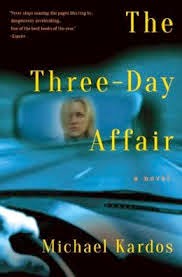
The Three-Day Affair by Michael Kardos
Six years ago, my bassist was shot dead in a New York nightclub.
Even though this line is of the back story variety, it is effective. We have some conflict in the form of a dead bassist and a character in the form of a narrator who, we may infer, has some musical tendencies. There is some setting thrown in for good measure. This is enough to navigate with and be pulled in by. The short prologue goes on to describe and explain the circumstance,s and before you can contemplate finishing, it is over. The reader is hooked. Unfortunately, it is a prologue and the writer will have to rehook in chapter 1, especially if the story starts in another time and place, like those annoying Cussler novel.
Chapter 1:
It almost didn't happen - the kidnapping and everything after.
This is preamble. The next line makes it go down a little easier.
That's the part that gets me, even now.
So as this is preamble that points towards some upcoming conflict in the form of a kidnapping that could have been avoided, what needs to happen next is dive right into this opening line. The next line:
The phone call came early Sunday morning, waking me out of a dead sleep.
Oops, two cliches: bed setting and phone call opening in one sentence. So this makes the opening preamble even more preambly, that is, something that was added in a later draft of the novel to make the cliches of bed and phone go down easier or even unnoticed. Not that I'm saying this author did it that way, but it feels like it. Sometimes that is where preamble comes from: a desperate attempt to spice up an otherwise mediocre opening line, paragraph or page.
First thing said:
"You're going to have to count me out, man."
This is still on the first page as the 4:55 AM conversation dances around a top secret plot point forcing the reader to read on if they care to find out what is going on. Then the caller decides that it wasn't a good idea to call and hangs up. So basically the reader learns that there is a problem but isn't told what it is. Personally, as I'm holding a novel, I don't need to be assured that there's a problem in this novel, that I will take for granted, as a story without conflict is no story. What I do want is the problem, and some, if not all, of the sordid details.
Verdict: Pass
I will give this three stars for the engaging prologue and writing style, but chapter 1 has the type of opening that's been done before - many times. No amount of preamble will fix that.
Sincerely,
Theodore Moracht
Even though this line is of the back story variety, it is effective. We have some conflict in the form of a dead bassist and a character in the form of a narrator who, we may infer, has some musical tendencies. There is some setting thrown in for good measure. This is enough to navigate with and be pulled in by. The short prologue goes on to describe and explain the circumstance,s and before you can contemplate finishing, it is over. The reader is hooked. Unfortunately, it is a prologue and the writer will have to rehook in chapter 1, especially if the story starts in another time and place, like those annoying Cussler novel.
Chapter 1:
It almost didn't happen - the kidnapping and everything after.
This is preamble. The next line makes it go down a little easier.
That's the part that gets me, even now.
So as this is preamble that points towards some upcoming conflict in the form of a kidnapping that could have been avoided, what needs to happen next is dive right into this opening line. The next line:
The phone call came early Sunday morning, waking me out of a dead sleep.
Oops, two cliches: bed setting and phone call opening in one sentence. So this makes the opening preamble even more preambly, that is, something that was added in a later draft of the novel to make the cliches of bed and phone go down easier or even unnoticed. Not that I'm saying this author did it that way, but it feels like it. Sometimes that is where preamble comes from: a desperate attempt to spice up an otherwise mediocre opening line, paragraph or page.
First thing said:
"You're going to have to count me out, man."
This is still on the first page as the 4:55 AM conversation dances around a top secret plot point forcing the reader to read on if they care to find out what is going on. Then the caller decides that it wasn't a good idea to call and hangs up. So basically the reader learns that there is a problem but isn't told what it is. Personally, as I'm holding a novel, I don't need to be assured that there's a problem in this novel, that I will take for granted, as a story without conflict is no story. What I do want is the problem, and some, if not all, of the sordid details.
Verdict: Pass
I will give this three stars for the engaging prologue and writing style, but chapter 1 has the type of opening that's been done before - many times. No amount of preamble will fix that.
Sincerely,
Theodore Moracht
Monday, 21 July 2014
Private L.A. by James Patterson and Mark Sullivan
It was nearing midnight that late-October evening on a dark stretch of beach in Malibu.
Exposition that is pure setting doesn't work for me. Exposition that introduces character and conflict does. I want to know what the story is about before when and where the story takes place, unless of course the setting is strife with conflict. This one isn't. I suppose there are some people who would feel differently, who would be very put out because they understand nothing of a story if they don't get the when and where first. But the essence of a story is things happening to people. That's just me, digging the essence of things first.
The next sentence:
Five men, lifelong surfers, lost souls, sat around a fire blazing in a portable steel pit set into the sand.
The lost souls bit is a little strange and needs some explaining. One possible inference being that they are lost souls because they are surfers.
First thing said:
"Bomber weed, N.P."
Then we learn that at least one of the five men had done two tours in Iraq and was incapable of love, hence the lost soul reference. A bit cliche, Terminator style, but anyway, these men sit around the fire so their back stories can unfold. In the second chapter of the prologue they are killed with a Glock! So there we have it, another violent prologue that fails to hook.
Chapter 1:
Shortly after midnight, as the first real storm of the season intensified outside, the lovely Guin Scott-Evans and I were sitting on the couch at my place, watching a gas fire, drinking a first-class bottle of Cabernet, and good-naturedly bantering over our nominees for sexist movie scene ever.
Exposition is fine if it's setting up conflict. This, however, reads like a Marlboro advert from the 1970's. Then, horror of horrors, we actually get the whole conversation of them discussing the sexist movie scene, like, ever. As if I care. This goes on for all of chapter 1, mercifully broken up, unfortunately, with back story until finally at the end, after being forced to go through this totally uninteresting character "development" to have the phone ring so the narrator can be told about the dead bodies in the prologue. Mindless character development, for the sake of character development never hooks.
Here's an idea: why not develop characters with them reacting to the difficult circumstances of the inciting event that's riddled with conflict? At least then it would be fun and not sound like one's reading pre-adolescent Flaubert struggling to inflate a story so as to buy another round of Botox treatments for his beloved grandmother.
Opening outline:
- Prologue: Mysterious men on a beach are discussing random things, getting drunk and high until they are mysteriously slaughtered by one of the mysterious men - who is sort of like the strong silent type who Americans love reading about and watching on TV or the big screen, but hate hanging out with and ignore in real life, as these strong silent types come off as rude and arrogant.
-Chapter 1: Two people are getting romantic talking about sexy scenes in movies, and are also drinking, until the phone rings and they are informed of what happened in the prologue.
There's a formula here (slaughter to sexy) and I expect the bestselling writers will continue with what works. I don't expect the market will reject this formula as the consumers who make up this mass market read on average only three books a year and so will never read enough to discover that this has been done a million times before.
Books today don't shine a light on the soul of the reader like they used to. Quite the opposite; it's as if we are scared of reading good literature for fear of what we might find inside ourselves.
Verdict: Fail
Sincerely,
Rudy Globird
Exposition that is pure setting doesn't work for me. Exposition that introduces character and conflict does. I want to know what the story is about before when and where the story takes place, unless of course the setting is strife with conflict. This one isn't. I suppose there are some people who would feel differently, who would be very put out because they understand nothing of a story if they don't get the when and where first. But the essence of a story is things happening to people. That's just me, digging the essence of things first.
The next sentence:
Five men, lifelong surfers, lost souls, sat around a fire blazing in a portable steel pit set into the sand.
The lost souls bit is a little strange and needs some explaining. One possible inference being that they are lost souls because they are surfers.
First thing said:
"Bomber weed, N.P."
Then we learn that at least one of the five men had done two tours in Iraq and was incapable of love, hence the lost soul reference. A bit cliche, Terminator style, but anyway, these men sit around the fire so their back stories can unfold. In the second chapter of the prologue they are killed with a Glock! So there we have it, another violent prologue that fails to hook.
Chapter 1:
Shortly after midnight, as the first real storm of the season intensified outside, the lovely Guin Scott-Evans and I were sitting on the couch at my place, watching a gas fire, drinking a first-class bottle of Cabernet, and good-naturedly bantering over our nominees for sexist movie scene ever.
Exposition is fine if it's setting up conflict. This, however, reads like a Marlboro advert from the 1970's. Then, horror of horrors, we actually get the whole conversation of them discussing the sexist movie scene, like, ever. As if I care. This goes on for all of chapter 1, mercifully broken up, unfortunately, with back story until finally at the end, after being forced to go through this totally uninteresting character "development" to have the phone ring so the narrator can be told about the dead bodies in the prologue. Mindless character development, for the sake of character development never hooks.
Here's an idea: why not develop characters with them reacting to the difficult circumstances of the inciting event that's riddled with conflict? At least then it would be fun and not sound like one's reading pre-adolescent Flaubert struggling to inflate a story so as to buy another round of Botox treatments for his beloved grandmother.
Opening outline:
- Prologue: Mysterious men on a beach are discussing random things, getting drunk and high until they are mysteriously slaughtered by one of the mysterious men - who is sort of like the strong silent type who Americans love reading about and watching on TV or the big screen, but hate hanging out with and ignore in real life, as these strong silent types come off as rude and arrogant.
-Chapter 1: Two people are getting romantic talking about sexy scenes in movies, and are also drinking, until the phone rings and they are informed of what happened in the prologue.
There's a formula here (slaughter to sexy) and I expect the bestselling writers will continue with what works. I don't expect the market will reject this formula as the consumers who make up this mass market read on average only three books a year and so will never read enough to discover that this has been done a million times before.
Books today don't shine a light on the soul of the reader like they used to. Quite the opposite; it's as if we are scared of reading good literature for fear of what we might find inside ourselves.
Verdict: Fail
Sincerely,
Rudy Globird
Wednesday, 16 July 2014
Where Monsters Dwell by Jorgen Brekke
There are no monsters under the bed.
That doesn't sound very interesting. It would be more fun to read that there are monsters under the bed. The paragraph is about a pronoun who built a spaceship in his room that is wrecked and about a crazy person downstairs who might have heard the crashing to the floor. There is no obvious connection between the second paragraph and the opening line so we must continue to read this short prologue to see if a connection is made. At the end there is the statement:
There are no monsters under the bed. But there's one towering over it.
Presumably this is a person the boy (he's been upgraded from a mere pronoun) is afraid of. The prologue is effective as a scene unfolds, in which someone is attacking the boy and his mother. We are made to assume they are both slaughtered, so two more prologies are sacrificed at the beginning of a novel for dramatic effect. Personally, bloody prologues don't hook me.
Chapter 1:
Bergen, Norway, September 1528
The mendicant monk had heard few good things about Bergen and even fewer about Norway, the land where he was born, about which he had forgotten so much.
No surprise that the prologue and chapter 1 are in different time zones. A monk in an opening line of a horror/mystery novel attracts attention, but there is little else here that will hook. Having heard few good things about Bergen, is too vague to hook. What else can one expect with words like: things and so much?
First thing said:
"I am everywhere."
The killer says this in the prologue. Part 1 begins with a quote from Alan De Lille, ca. 1100 stating: God is an understandable sphere in which the center is everywhere and the circumference nowhere. This suggests that whatever killed the two prologies was godlike?
There are no obvious cliches, there are scenes with conflict, there is little back story, yet the forward narrative is understandable, so this opening could receive a much higher rating. It's just that the bloody, violent prologue opening has been done so many times that it starts to bore and wear thin. It's becoming a cliche in its own right.
Verdict: Pass (Barely)
Sincerely,
Theodore Moracht
That doesn't sound very interesting. It would be more fun to read that there are monsters under the bed. The paragraph is about a pronoun who built a spaceship in his room that is wrecked and about a crazy person downstairs who might have heard the crashing to the floor. There is no obvious connection between the second paragraph and the opening line so we must continue to read this short prologue to see if a connection is made. At the end there is the statement:
There are no monsters under the bed. But there's one towering over it.
Presumably this is a person the boy (he's been upgraded from a mere pronoun) is afraid of. The prologue is effective as a scene unfolds, in which someone is attacking the boy and his mother. We are made to assume they are both slaughtered, so two more prologies are sacrificed at the beginning of a novel for dramatic effect. Personally, bloody prologues don't hook me.
Chapter 1:
Bergen, Norway, September 1528
The mendicant monk had heard few good things about Bergen and even fewer about Norway, the land where he was born, about which he had forgotten so much.
No surprise that the prologue and chapter 1 are in different time zones. A monk in an opening line of a horror/mystery novel attracts attention, but there is little else here that will hook. Having heard few good things about Bergen, is too vague to hook. What else can one expect with words like: things and so much?
First thing said:
"I am everywhere."
The killer says this in the prologue. Part 1 begins with a quote from Alan De Lille, ca. 1100 stating: God is an understandable sphere in which the center is everywhere and the circumference nowhere. This suggests that whatever killed the two prologies was godlike?
There are no obvious cliches, there are scenes with conflict, there is little back story, yet the forward narrative is understandable, so this opening could receive a much higher rating. It's just that the bloody, violent prologue opening has been done so many times that it starts to bore and wear thin. It's becoming a cliche in its own right.
Verdict: Pass (Barely)
Sincerely,
Theodore Moracht
Friday, 11 July 2014
You Don't Want to Know by Lisa Jackson
Again, the dream creeps in.
...and it creeps in with weather as the dreams starts like this:
It's a foggy, gray day...
Seriously? Who actually dreams about weather? Or remembers the weather in their dreams? Or cares? Anyway, this is the nappy beginning of what must be a nappy prologue so we will stop here. Not hooked by a dream of foggy weather, and like a dream, this opening is vague and in parts one of those: ...it was like this, but not really... type of descriptions.
This author has one chance to hook me and she failed. Dream openings are perhaps the oldest cliche and the most obvious sign of an amateur, regardless if they've been published or not. Since this is a prologue, we can skip it for now and see if chapter 1 has a hook in the opening.
Chapter 1:
"I'm serious, you can't tell a soul," a breathy voice whispered.
Is that a comma splice? I'm serious and you can't tell a soul, are independent clauses so should be joined with a semicolon instead of a comma. The other thing that's weird about this line is the breathy voice. Is this opposed to a non-breathy voice? Lungs breath, the mouth and nose breath but a voice can't breath. Sound can't breath. If this is figurative and not to be taken literally then what is the image the author wishes to convey? A windy voice?
What this most likely means is that the person is breathing when speaking, as in heavy breather/creepy pervert, yet this voice is whispering. I'm of the camp that a person whispers not a voice, but if one wants to say a voice is the character, in order to create suspense and avoid the pronoun, well, whatever.
This gets the bed setting award when we learn that Ava is in bed and listening to characters talking, nicknamed Breathy Voice and Second Voice. It's silly when one stops and thinks about how this story is told.
The wording and structure is meant to create a scene with tension with a secret about Ava, but with sentences like those below, it doesn't come off as intense or mysterious at all, but more as an overwritten absurd prose assignment by a bored grade 10 student.
Inhaling a deep breath, she blinked.
Ava felt a jab of betrayal.
More whispering... [This so-called line reads like grade 5 material.]
The short of it is that Breathy Voice and Second Voice are talking about Ava in bits and pieces and this is supposed to make the reader curious and want to read on, as not all the information is provided to understand what this is about. Obviously, this will work for some, but I don't appreciate having my time wasted with melodramatic openings that belong in a horrid novel that Jan Austen would giggle over. In the final analysis, I really don't want to know.
Prediction: This author will not be read after her death as there will be other crap being published by her successors. In hundreds of years she'll be as well known as Bulwer-Lytton's editor. This type of work will be a mere footnote in the decline of Western civilization. That will be the legacy of such work, and there is plenty of it clogging up the bookshelves.
Verdict: Boring Fail
Sincerely,
Rudy Globird
...and it creeps in with weather as the dreams starts like this:
It's a foggy, gray day...
Seriously? Who actually dreams about weather? Or remembers the weather in their dreams? Or cares? Anyway, this is the nappy beginning of what must be a nappy prologue so we will stop here. Not hooked by a dream of foggy weather, and like a dream, this opening is vague and in parts one of those: ...it was like this, but not really... type of descriptions.
This author has one chance to hook me and she failed. Dream openings are perhaps the oldest cliche and the most obvious sign of an amateur, regardless if they've been published or not. Since this is a prologue, we can skip it for now and see if chapter 1 has a hook in the opening.
Chapter 1:
"I'm serious, you can't tell a soul," a breathy voice whispered.
Is that a comma splice? I'm serious and you can't tell a soul, are independent clauses so should be joined with a semicolon instead of a comma. The other thing that's weird about this line is the breathy voice. Is this opposed to a non-breathy voice? Lungs breath, the mouth and nose breath but a voice can't breath. Sound can't breath. If this is figurative and not to be taken literally then what is the image the author wishes to convey? A windy voice?
What this most likely means is that the person is breathing when speaking, as in heavy breather/creepy pervert, yet this voice is whispering. I'm of the camp that a person whispers not a voice, but if one wants to say a voice is the character, in order to create suspense and avoid the pronoun, well, whatever.
This gets the bed setting award when we learn that Ava is in bed and listening to characters talking, nicknamed Breathy Voice and Second Voice. It's silly when one stops and thinks about how this story is told.
The wording and structure is meant to create a scene with tension with a secret about Ava, but with sentences like those below, it doesn't come off as intense or mysterious at all, but more as an overwritten absurd prose assignment by a bored grade 10 student.
Inhaling a deep breath, she blinked.
Ava felt a jab of betrayal.
More whispering... [This so-called line reads like grade 5 material.]
The short of it is that Breathy Voice and Second Voice are talking about Ava in bits and pieces and this is supposed to make the reader curious and want to read on, as not all the information is provided to understand what this is about. Obviously, this will work for some, but I don't appreciate having my time wasted with melodramatic openings that belong in a horrid novel that Jan Austen would giggle over. In the final analysis, I really don't want to know.
Prediction: This author will not be read after her death as there will be other crap being published by her successors. In hundreds of years she'll be as well known as Bulwer-Lytton's editor. This type of work will be a mere footnote in the decline of Western civilization. That will be the legacy of such work, and there is plenty of it clogging up the bookshelves.
Verdict: Boring Fail
Sincerely,
Rudy Globird
Thursday, 10 July 2014
Ice Cold Kill by Dana Haynes
Ray Calabrese looked up from his BlackBerry to see Daria Gibron stride into the Rodeo Drive wine bar in Lycra exercise togs and sneakers, her hair slicked back, sans makeup.
So the prologue begins with the characters showing up at a meeting place, one with a phone and the other without makeup. This is a visual intro, more fitting for a film than for a book. The attempt at figurative language tries to make up for the filmy beginning with:
She poured herself into the opposite chair.
Now, that' more like it; figurative language is what novels are made of; it's not something that would particularly work well in a film. Writers need to remember the medium in which they are expressing themselves and think less about how the book would look as a film. In this case, the opening line reads more like the script of a TV show about to be canceled than a movie though.
The short opening scene is about two people discussing another meeting that didn't happen, dropping the hint that these two are FBI. The prologue then shifts to four hours earlier and Daria from the first scene is being offered work and checks with Ray, the other character from the first scene before accepting. So the opening scene in the wine bar is a prologue to the porlogue. Prologues within prologues is not something I've come across so often and I'm not sure if I should scoff or go, "hmm," and stroke my chin in intellectual delight. In the end, I do neither. This should just begin with the meeting rather than with a meeting about the meeting.
Chapter 1:
Desert, South of the Sea of Galilee
The prisoners lay in their cots.
The cells are then described only to confirm that they are regular cells, so the description wasn't necessary and only serves to defuse my attention span. In the second paragraph we are introduced to some characters playing name that singer or composer or whatever game. This does not hook.
First thing said:
"Hallo, Ray."
Dialogue that does nothing but give us a name is considered incidental on this blog and therefore not effective as it does not move plot forward nor reveal character, and no, a name does not reveal character.
The prologue is not short and switches scenes multiple times with back story and description interspersed. I lost interest on page 3.
Verdict: Fail
Sincerely,
Rudy Globird
So the prologue begins with the characters showing up at a meeting place, one with a phone and the other without makeup. This is a visual intro, more fitting for a film than for a book. The attempt at figurative language tries to make up for the filmy beginning with:
She poured herself into the opposite chair.
Now, that' more like it; figurative language is what novels are made of; it's not something that would particularly work well in a film. Writers need to remember the medium in which they are expressing themselves and think less about how the book would look as a film. In this case, the opening line reads more like the script of a TV show about to be canceled than a movie though.
The short opening scene is about two people discussing another meeting that didn't happen, dropping the hint that these two are FBI. The prologue then shifts to four hours earlier and Daria from the first scene is being offered work and checks with Ray, the other character from the first scene before accepting. So the opening scene in the wine bar is a prologue to the porlogue. Prologues within prologues is not something I've come across so often and I'm not sure if I should scoff or go, "hmm," and stroke my chin in intellectual delight. In the end, I do neither. This should just begin with the meeting rather than with a meeting about the meeting.
Chapter 1:
Desert, South of the Sea of Galilee
The prisoners lay in their cots.
The cells are then described only to confirm that they are regular cells, so the description wasn't necessary and only serves to defuse my attention span. In the second paragraph we are introduced to some characters playing name that singer or composer or whatever game. This does not hook.
First thing said:
"Hallo, Ray."
Dialogue that does nothing but give us a name is considered incidental on this blog and therefore not effective as it does not move plot forward nor reveal character, and no, a name does not reveal character.
The prologue is not short and switches scenes multiple times with back story and description interspersed. I lost interest on page 3.
Verdict: Fail
Sincerely,
Rudy Globird
Tuesday, 8 July 2014
Bad Blood by Dana Stabenow
Two villages, where two rivers meet.
This is a sentence fragment that would look much better as a header or title to the prologue than an opening line. The fact that it's about geology makes it worse. All of page one is about the geological formations and the history of the setting - that is to say - it is not gripping. The only question this raises: Where's the bad blood?
This prologue begins with the word "One" which I thought meant that the prologue had a couple of chapters of its own, but it turns out that there is only one chapter to the prologue so I'm confused as it why it was necessary to say one when there is only one.
Then we come to Act 1 and chapter two. So this means that chapter 1 is the prologue and chapter 2 is chapter 1 of Act 1.
Chapter 1:
Tuesday July 10
Kushtaka
Tyler Mack was an eighteen-year-old stick of postadolescent dynamite just waiting for the right match.
This sounds like Jessica Fletcher (who doesn't actually exist) meets Raymond Chandler. I laughed reading this, the postadolescent dynamite reference is funny, hyperbole has a way of doing that. The narrative goes on to say he is smart in all the wrong ways and describes him, accusing him of being mostly muscle and bone, as opposed to the American standard of being, what, mostly fat and bone? The slang used in the narrative is weird. For example:
...dark hair flopped in dark brown eyes...
He was a shirttail relative of Auntie Edna...which made the entire Shugak clan part of his extended family in Byzantine ways known only to its elders.
...quick to grab him up by the ears...
Overall, the narrative reads like its parodying the mystery genre. Some sentences look like they've been thrown together into a blender, I mean, word processor.
Uncle Pat's outboard was so finely tuned and so diligently maintained that its muted purr was barely audible above the rush of water beneath the skiff's hull. Eagles chittered from the treetops.
First thing said:
"Goddamn good-for-nothing little..."
Verdict: Fail
Looks like we have a new inductee to the Horrible Writer's Club. The sentence structure and paragraph structure is so unnatural that it feels like I'm reading grade 7 homework written by a student pulling an all-nighter, desperate for that B-.
Sincerely,
Rudy Globird
This is a sentence fragment that would look much better as a header or title to the prologue than an opening line. The fact that it's about geology makes it worse. All of page one is about the geological formations and the history of the setting - that is to say - it is not gripping. The only question this raises: Where's the bad blood?
This prologue begins with the word "One" which I thought meant that the prologue had a couple of chapters of its own, but it turns out that there is only one chapter to the prologue so I'm confused as it why it was necessary to say one when there is only one.
Then we come to Act 1 and chapter two. So this means that chapter 1 is the prologue and chapter 2 is chapter 1 of Act 1.
Chapter 1:
Tuesday July 10
Kushtaka
Tyler Mack was an eighteen-year-old stick of postadolescent dynamite just waiting for the right match.
This sounds like Jessica Fletcher (who doesn't actually exist) meets Raymond Chandler. I laughed reading this, the postadolescent dynamite reference is funny, hyperbole has a way of doing that. The narrative goes on to say he is smart in all the wrong ways and describes him, accusing him of being mostly muscle and bone, as opposed to the American standard of being, what, mostly fat and bone? The slang used in the narrative is weird. For example:
...dark hair flopped in dark brown eyes...
He was a shirttail relative of Auntie Edna...which made the entire Shugak clan part of his extended family in Byzantine ways known only to its elders.
...quick to grab him up by the ears...
Overall, the narrative reads like its parodying the mystery genre. Some sentences look like they've been thrown together into a blender, I mean, word processor.
Uncle Pat's outboard was so finely tuned and so diligently maintained that its muted purr was barely audible above the rush of water beneath the skiff's hull. Eagles chittered from the treetops.
First thing said:
"Goddamn good-for-nothing little..."
Verdict: Fail
Looks like we have a new inductee to the Horrible Writer's Club. The sentence structure and paragraph structure is so unnatural that it feels like I'm reading grade 7 homework written by a student pulling an all-nighter, desperate for that B-.
Sincerely,
Rudy Globird
Thursday, 3 July 2014
Mr. Mercedes by Stephen King
Augie Odenekirk had a 1997 Datsun that still ran well in spite of high mileage, but gas was expensive, especially for a man with no job, and City Center was on the far side of town, so he decided to take the last bus of the night.
There is something to be said for opening without death and violence, as if they are the only things that will hook the world these days. Of course, conflict is essential to a hook, and there is little in this opening line, at least nothing that would make one care to read on. Expensive gas and being unemployed are not engaging.
I award this with the car opening cliche because the character has gotten into a vehicle to drive to the beginning of the plot and conflict or in this case to be taken to it by public transportation.
By the end of this prologue we get the violence and death that the modern consumer demands.
First thing said:
"Good luck, man."
This dialogue neither reveals character or moves plot forward, it's only purpose is to establish King's tone, and champion the average man that we've deceived ourselves into believing is interesting enough to read about. When the truth be told these "average" joes in King's novels are anything but average or normal.
The opening scene is about this guy at a City center job placement place talking to some girl who has a kid and the struggles of being in a lineup with a baby and in unpleasant weather. Almost ten pages are invested in getting the reader mildly to care for these characters in dismal circumstances before King exterminates them, turning them into prologies (expendable characters that die horribly in prologues and whose only purpose in the novel is to hook us with their bloody and sometimes creatively violent deaths).
I flip through the prologue and I wonder why I needed to read all that. It's too long.
Chapter 1:
Hodges walks out of the kitchen with a can of beer in his hand, sits down in a La-Z-Boy, and puts the can down on the little table to his left, next to the gun.
The gun opening and drinking cliche begin chapter 1. The gun is treated like a dog (he pats it), on comes the TV and then we transition to paragraph 2 and back story. However, I like the writing style; it's a little more literary in tone - with long paragraphs, a trademark of a King novels - until page 2 when the obligatory swearing starts and that famous King tone starts pandering to the lowest common denominator.
Honestly, this opening doesn't feel any different than any other typical novel of this genre.
Verdict: Fail
Sincerely,
Rudy Globird
There is something to be said for opening without death and violence, as if they are the only things that will hook the world these days. Of course, conflict is essential to a hook, and there is little in this opening line, at least nothing that would make one care to read on. Expensive gas and being unemployed are not engaging.
I award this with the car opening cliche because the character has gotten into a vehicle to drive to the beginning of the plot and conflict or in this case to be taken to it by public transportation.
By the end of this prologue we get the violence and death that the modern consumer demands.
First thing said:
"Good luck, man."
This dialogue neither reveals character or moves plot forward, it's only purpose is to establish King's tone, and champion the average man that we've deceived ourselves into believing is interesting enough to read about. When the truth be told these "average" joes in King's novels are anything but average or normal.
The opening scene is about this guy at a City center job placement place talking to some girl who has a kid and the struggles of being in a lineup with a baby and in unpleasant weather. Almost ten pages are invested in getting the reader mildly to care for these characters in dismal circumstances before King exterminates them, turning them into prologies (expendable characters that die horribly in prologues and whose only purpose in the novel is to hook us with their bloody and sometimes creatively violent deaths).
I flip through the prologue and I wonder why I needed to read all that. It's too long.
Chapter 1:
Hodges walks out of the kitchen with a can of beer in his hand, sits down in a La-Z-Boy, and puts the can down on the little table to his left, next to the gun.
The gun opening and drinking cliche begin chapter 1. The gun is treated like a dog (he pats it), on comes the TV and then we transition to paragraph 2 and back story. However, I like the writing style; it's a little more literary in tone - with long paragraphs, a trademark of a King novels - until page 2 when the obligatory swearing starts and that famous King tone starts pandering to the lowest common denominator.
Honestly, this opening doesn't feel any different than any other typical novel of this genre.
Verdict: Fail
Sincerely,
Rudy Globird
Subscribe to:
Posts (Atom)